
Wolfgang Amadeus Mozart: niño prodigio, genio e inmortal
En la tienda en línea www.partituras-musicales.com podrá comprar todas las partituras de Mozart.
Realizamos entregas rápidas y le enviamos sus partituras a casa sin gastos de envío (dentro de Alemania) a partir de 35 euros.
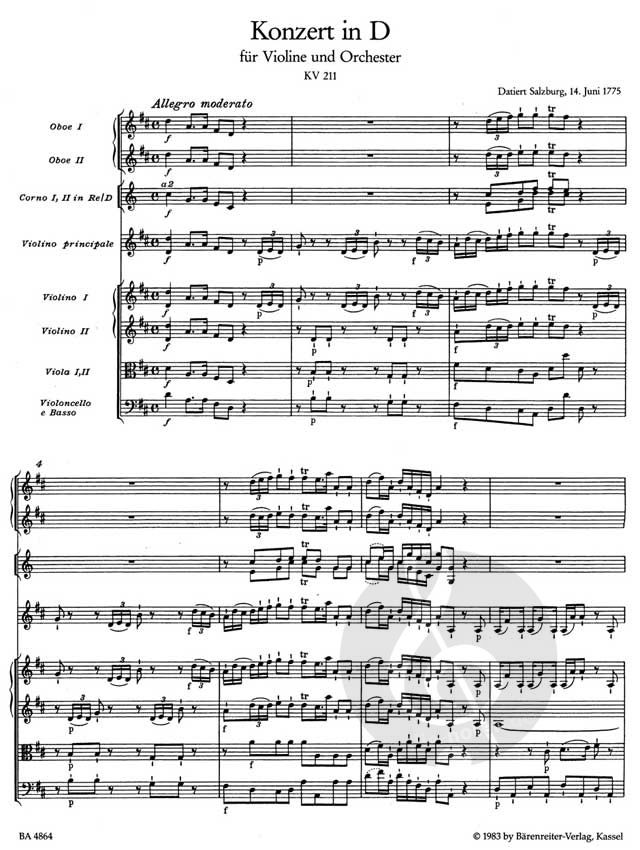

Las obras en las que Mozart utilizó instrumentos de cuerda como solistas fueron compuestas principalmente entre 1773 y 1779. Sin embargo, los años 1773 y 1775 son especialmente significativos dentro d...
Las obras en las que Mozart utilizó instrumentos de cuerda como solistas fueron compuestas principalmente entre 1773 y 1779. Sin embargo, los años 1773 y 1775 son especialmente significativos dentro d...
- Violín y orquesta
- Partitura (Urtext) Descargar
- Bärenreiter Verlag
-
 Inmediatamente disponible
Descargar inmediatamente al finalizar la orden - Descarga instantánea
Inmediatamente disponible
| Descargar inmediatamente al finalizar la orden
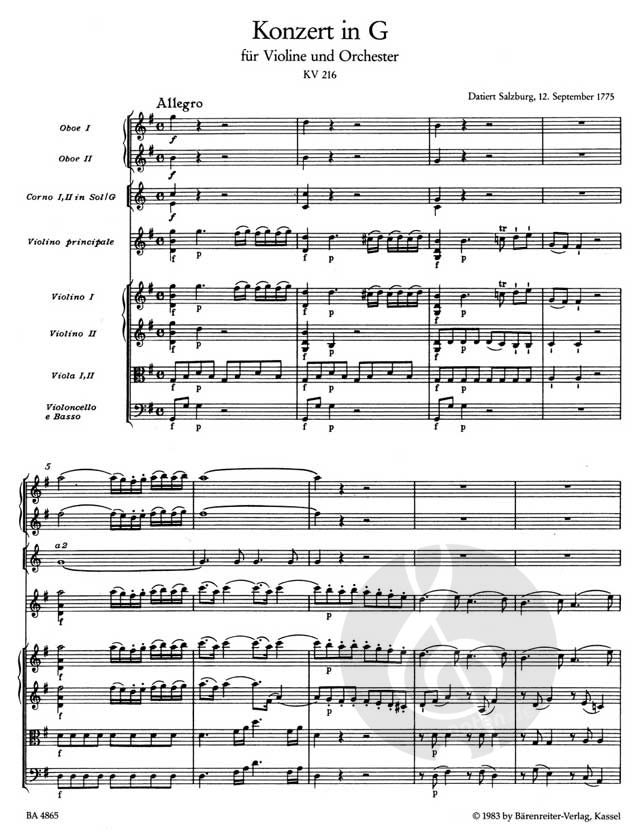
Las obras en las que Mozart utilizó instrumentos de cuerda como solistas fueron compuestas principalmente entre 1773 y 1779. Sin embargo, los años 1773 y 1775 son especialmente significativos dentro d...
Las obras en las que Mozart utilizó instrumentos de cuerda como solistas fueron compuestas principalmente entre 1773 y 1779. Sin embargo, los años 1773 y 1775 son especialmente significativos dentro d...
- Violín y orquesta
- Partitura (Urtext) Descargar
- Bärenreiter Verlag
-
Inmediatamente disponible
Descargar inmediatamente al finalizar la orden - Descarga instantánea
Inmediatamente disponible
| Descargar inmediatamente al finalizar la orden
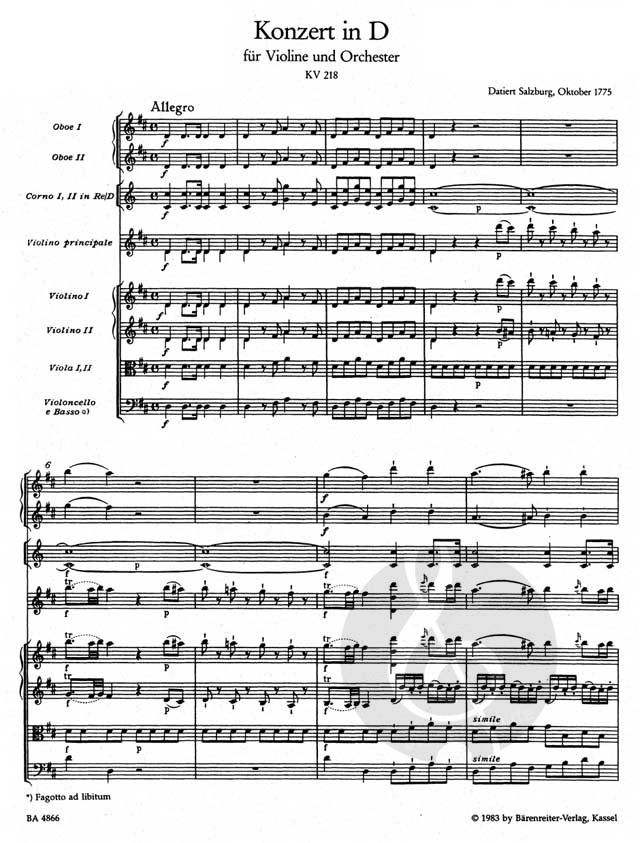
Las obras en las que Mozart utilizó instrumentos de cuerda como solistas fueron compuestas principalmente entre 1773 y 1779. Sin embargo, los años 1773 y 1775 son especialmente significativos dentro d...
Las obras en las que Mozart utilizó instrumentos de cuerda como solistas fueron compuestas principalmente entre 1773 y 1779. Sin embargo, los años 1773 y 1775 son especialmente significativos dentro d...
- Violín y orquesta
- Partitura (Urtext) Descargar
- Bärenreiter Verlag
-
Inmediatamente disponible
Descargar inmediatamente al finalizar la orden - Descarga instantánea
Inmediatamente disponible
| Descargar inmediatamente al finalizar la orden
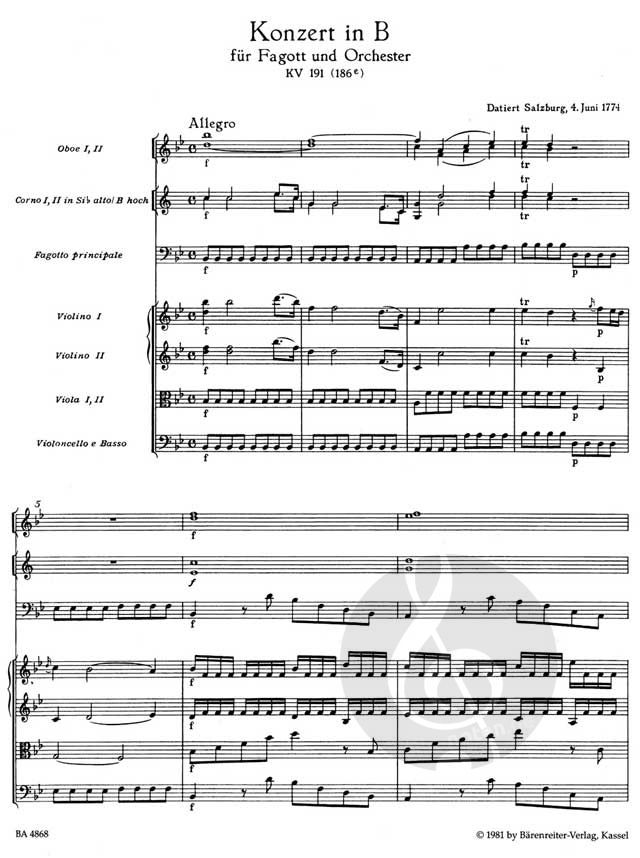
Wolfgang Amadeus Mozart's Concerto in B-flat major, K. 191 (186e) stands as the undisputed centerpiece and radiant pinnacle of the classical bassoon repertoire. Filled with effortless wit, lyrical gra...
Wolfgang Amadeus Mozart's Concerto in B-flat major, K. 191 (186e) stands as the undisputed centerpiece and radiant pinnacle of the classical bassoon repertoire. Filled with effortless wit, lyrical gra...
- Fagot y orquesta
- Partitura general (Urtext)
- Bärenreiter Verlag
-
disponible en 2-4 días laborables
- También disponible para descarga.
disponible en 2-4 días laborables
Wolfgang Amadeus Mozart's Concerto in B-flat major, K. 191 (186e) stands as the undisputed centerpiece and radiant pinnacle of the classical bassoon repertoire. Filled with effortless wit, lyrical gra...
Wolfgang Amadeus Mozart's Concerto in B-flat major, K. 191 (186e) stands as the undisputed centerpiece and radiant pinnacle of the classical bassoon repertoire. Filled with effortless wit, lyrical gra...
- Fagot y orquesta
- Partitura (Urtext) Descargar
- Bärenreiter Verlag
-
Inmediatamente disponible
Descargar inmediatamente al finalizar la orden - Descarga instantánea
Inmediatamente disponible
| Descargar inmediatamente al finalizar la orden
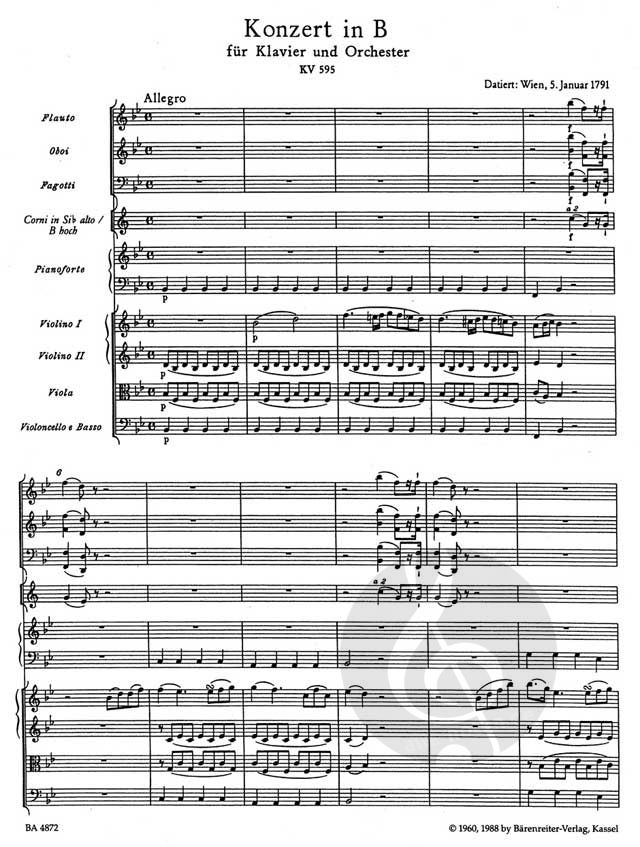
Wolfgang Amadeus Mozart's Piano Concerto No. 27 in B-flat major, K. 595, is a timeless masterpiece filled with touching intimacy, lyrical elegance, and profound poetry. As Mozart's final completed pia...
Wolfgang Amadeus Mozart's Piano Concerto No. 27 in B-flat major, K. 595, is a timeless masterpiece filled with touching intimacy, lyrical elegance, and profound poetry. As Mozart's final completed pia...
- Piano y orquesta
- Partitura general (Urtext)
- Bärenreiter Verlag
-
disponible en 2-4 días laborables
- También disponible para descarga.
disponible en 2-4 días laborables
Wolfgang Amadeus Mozart's Piano Concerto No. 27 in B-flat major, K. 595, is a timeless masterpiece filled with touching intimacy, lyrical elegance, and profound poetry. As Mozart's final completed pia...
Wolfgang Amadeus Mozart's Piano Concerto No. 27 in B-flat major, K. 595, is a timeless masterpiece filled with touching intimacy, lyrical elegance, and profound poetry. As Mozart's final completed pia...
- Piano y orquesta
- Partitura (Urtext) Descargar
- Bärenreiter Verlag
-
Inmediatamente disponible
Descargar inmediatamente al finalizar la orden - Descarga instantánea
Inmediatamente disponible
| Descargar inmediatamente al finalizar la orden
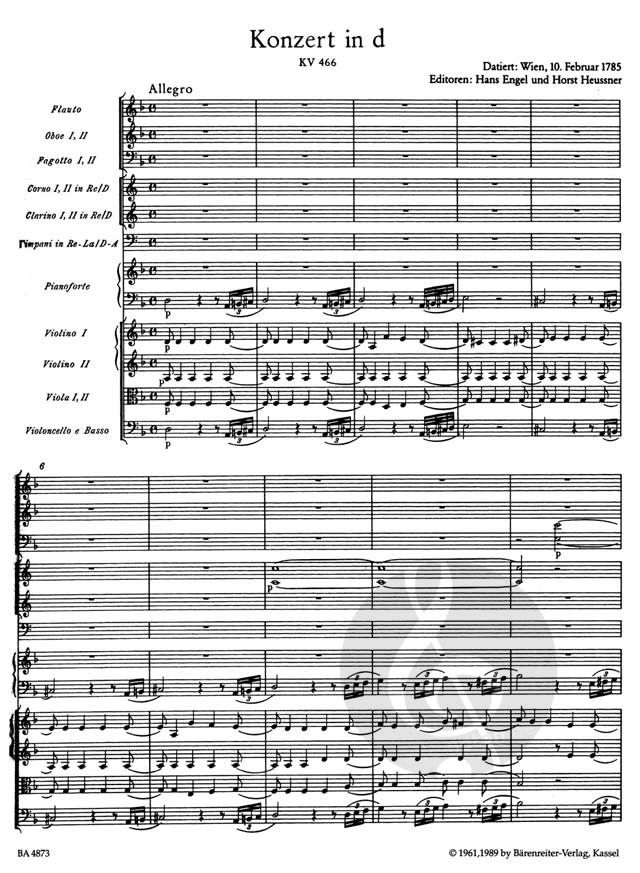
Concierto para piano y orquesta. Urtext de la Nueva Edición Mozart. Piano solo, flauta, oboe (2), fagot (2), trompa (2), trompeta (2), timbales, cuerdas - partitura; Edición Urtext
Concierto para piano y orquesta. Urtext de la Nueva Edición Mozart. Piano solo, flauta, oboe (2), fagot (2), trompa (2), trompeta (2), timbales, cuerdas - partitura; Edición Urtext
- Piano y orquesta
- Partitura (Urtext) Descargar
- Bärenreiter Verlag
-
Inmediatamente disponible
Descargar inmediatamente al finalizar la orden - Descarga instantánea
Inmediatamente disponible
| Descargar inmediatamente al finalizar la orden
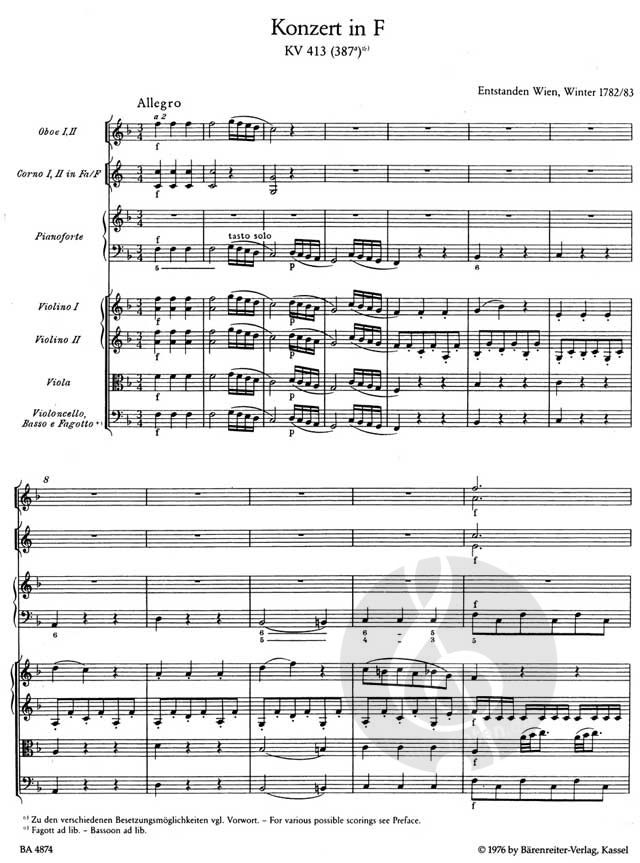
Konzert für Klavier und Orchester. Urtext der Neuen Mozart-Ausgabe - Concerto for Piano and Orchestra. KlavSolo, Flöte, Oboe (2), Horn (2), Streicher - Partitur; Urtextausgabe
Konzert für Klavier und Orchester. Urtext der Neuen Mozart-Ausgabe - Concerto for Piano and Orchestra. KlavSolo, Flöte, Oboe (2), Horn (2), Streicher - Partitur; Urtextausgabe
- Piano y orquesta
- Partitura general (Urtext)
- Bärenreiter Verlag
-
disponible en 2-4 días laborables
- También disponible para descarga.
disponible en 2-4 días laborables
Konzert für Klavier und Orchester. Urtext der Neuen Mozart-Ausgabe - Concerto for Piano and Orchestra. KlavSolo, Flöte, Oboe (2), Horn (2), Streicher - Partitur; Urtextausgabe
Konzert für Klavier und Orchester. Urtext der Neuen Mozart-Ausgabe - Concerto for Piano and Orchestra. KlavSolo, Flöte, Oboe (2), Horn (2), Streicher - Partitur; Urtextausgabe
- Piano y orquesta
- Partitura (Urtext) Descargar
- Bärenreiter Verlag
-
Inmediatamente disponible
Descargar inmediatamente al finalizar la orden - Descarga instantánea
Inmediatamente disponible
| Descargar inmediatamente al finalizar la orden
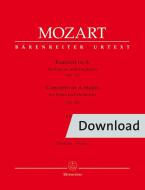
Wolfgang Amadeus Mozart's Piano Concerto No. 12 in A major, K. 414 enchants with its melodic grace, tonal elegance, and delicate intimacy. As the first of Mozart's early Viennese piano concertos, it d...
Wolfgang Amadeus Mozart's Piano Concerto No. 12 in A major, K. 414 enchants with its melodic grace, tonal elegance, and delicate intimacy. As the first of Mozart's early Viennese piano concertos, it d...
- Piano y orquesta
- Partitura (Urtext) Descargar
- Bärenreiter Verlag
-
Inmediatamente disponible
Descargar inmediatamente al finalizar la orden - Descarga instantánea
Inmediatamente disponible
| Descargar inmediatamente al finalizar la orden
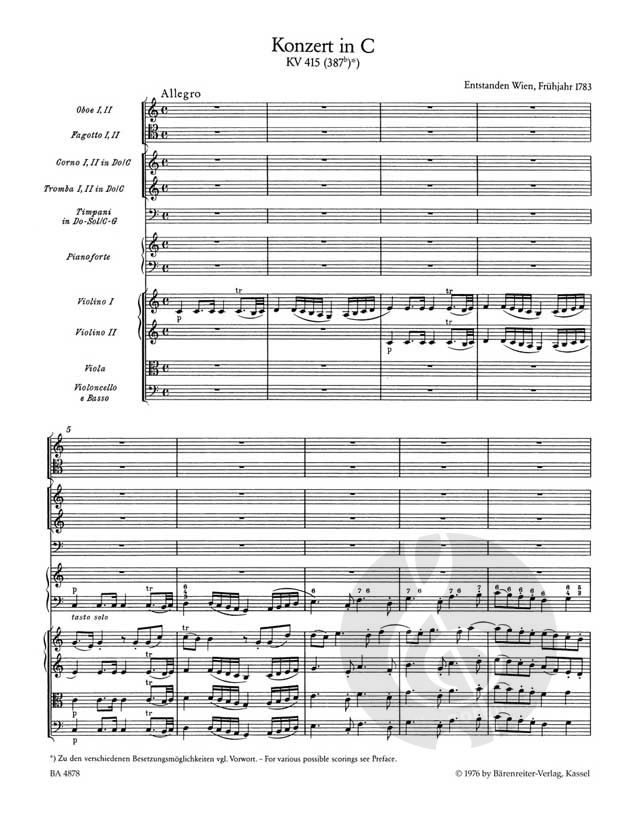
Experience Wolfgang Amadeus Mozart's brilliant Piano Concerto No. 13 in C major, K. 415 (387b) in an exceptional edition published by the renowned Bärenreiter Verlag. This masterwork captivates with i...
Experience Wolfgang Amadeus Mozart's brilliant Piano Concerto No. 13 in C major, K. 415 (387b) in an exceptional edition published by the renowned Bärenreiter Verlag. This masterwork captivates with i...
- Piano y orquesta
- Partitura (Urtext) Descargar
- Bärenreiter Verlag
-
Inmediatamente disponible
Descargar inmediatamente al finalizar la orden - Descarga instantánea
Inmediatamente disponible
| Descargar inmediatamente al finalizar la orden
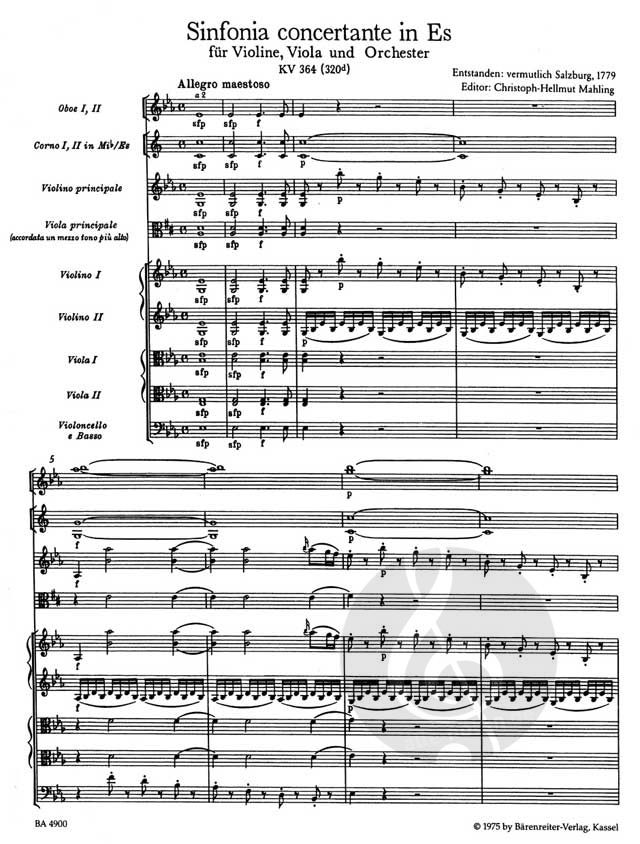
Sinfonía Concertante. Urtext de la Nueva Edición Mozart. Violín solo, Viola solo, Oboe (2), Trompa (2), Cuerdas - Partitura; Edición Urtext
Sinfonía Concertante. Urtext de la Nueva Edición Mozart. Violín solo, Viola solo, Oboe (2), Trompa (2), Cuerdas - Partitura; Edición Urtext
- Violín, viola y orquesta
- Partitura (Urtext) Descargar
- Bärenreiter Verlag
-
-
Inmediatamente disponible
Descargar inmediatamente al finalizar la orden - Descarga instantánea
Inmediatamente disponible
| Descargar inmediatamente al finalizar la orden
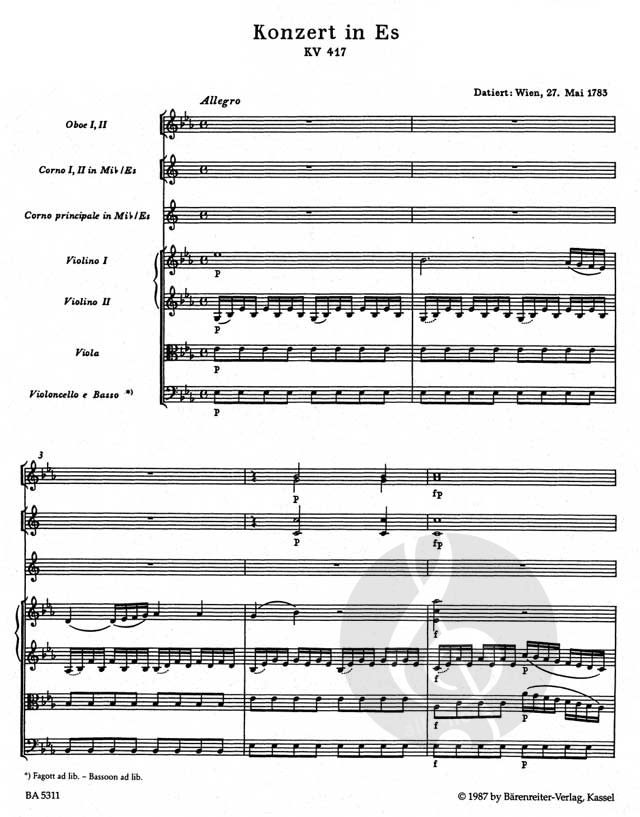
Cuando se escuchan los conciertos para viento de Mozart en la sala de conciertos, es, como escribió el musicólogo Alfred Einstein, "como si de repente se abrieran puertas y ventanas y una brisa fresca...
Cuando se escuchan los conciertos para viento de Mozart en la sala de conciertos, es, como escribió el musicólogo Alfred Einstein, "como si de repente se abrieran puertas y ventanas y una brisa fresca...
- Trompa y orquesta
- Partitura (Urtext) Descargar
- Bärenreiter Verlag
-
Inmediatamente disponible
Descargar inmediatamente al finalizar la orden - Descarga instantánea
Inmediatamente disponible
| Descargar inmediatamente al finalizar la orden
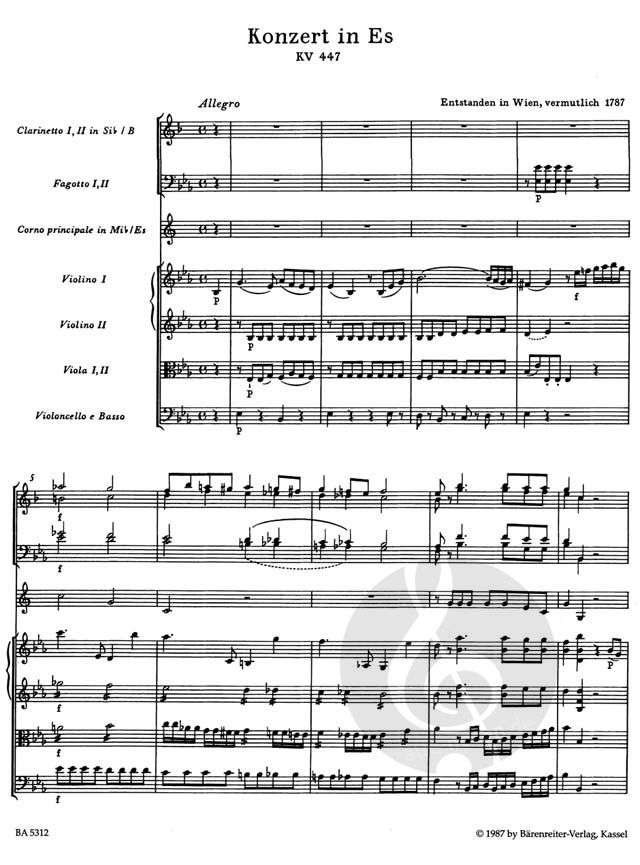
Cuando se escuchan los conciertos para viento de Mozart en la sala de conciertos, es, como escribió el musicólogo Alfred Einstein, "como si de repente se abrieran puertas y ventanas y una brisa fresca...
Cuando se escuchan los conciertos para viento de Mozart en la sala de conciertos, es, como escribió el musicólogo Alfred Einstein, "como si de repente se abrieran puertas y ventanas y una brisa fresca...
- Trompa y orquesta
- Partitura (Urtext) Descargar
- Bärenreiter Verlag
-
Inmediatamente disponible
Descargar inmediatamente al finalizar la orden - Descarga instantánea
Inmediatamente disponible
| Descargar inmediatamente al finalizar la orden
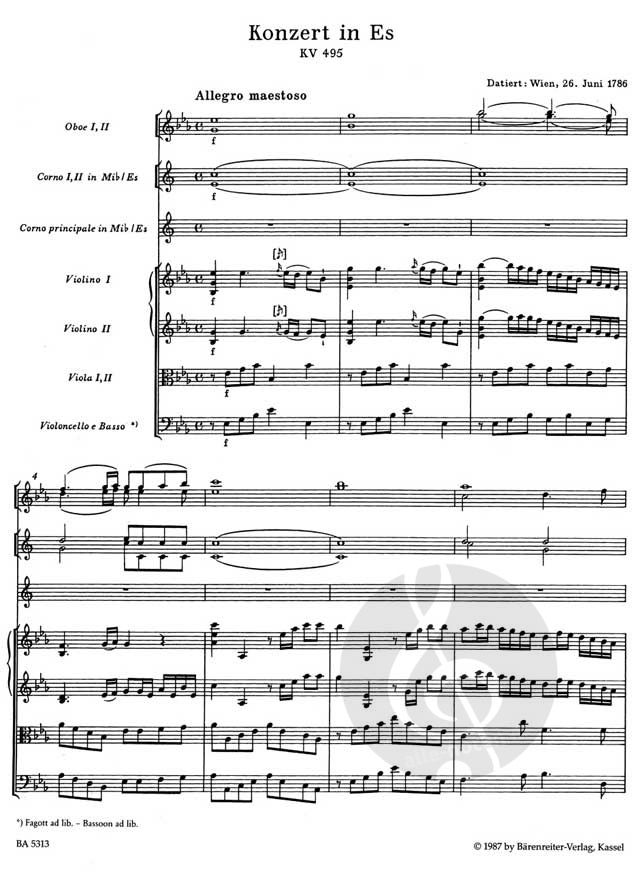
Wolfgang Amadeus Mozart's Horn Concerto No. 4 in E-flat major, K. 495, stands as one of the undisputed pinnacles of the brass repertoire. Captivating musicians and audiences worldwide, this masterpiec...
Wolfgang Amadeus Mozart's Horn Concerto No. 4 in E-flat major, K. 495, stands as one of the undisputed pinnacles of the brass repertoire. Captivating musicians and audiences worldwide, this masterpiec...
- Trompa y orquesta
- Partitura general (Urtext)
- Bärenreiter Verlag
-
disponible en 2-4 días laborables
- También disponible para descarga.
disponible en 2-4 días laborables
Cuando se escuchan los conciertos para viento de Mozart en la sala de conciertos, es, como escribió el musicólogo Alfred Einstein, "como si de repente se abrieran puertas y ventanas y una brisa fresca...
Cuando se escuchan los conciertos para viento de Mozart en la sala de conciertos, es, como escribió el musicólogo Alfred Einstein, "como si de repente se abrieran puertas y ventanas y una brisa fresca...
- Trompa y orquesta
- Partitura (Urtext) Descargar
- Bärenreiter Verlag
-
Inmediatamente disponible
Descargar inmediatamente al finalizar la orden - Descarga instantánea
Inmediatamente disponible
| Descargar inmediatamente al finalizar la orden
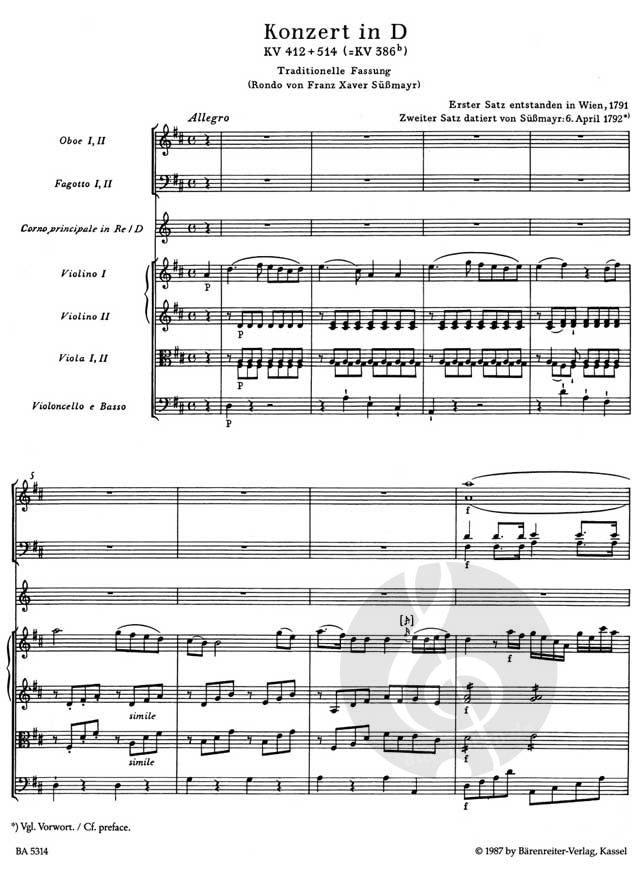
Hornkonzert. Urtext der Neuen Mozart-Ausgabe. Traditionelle Fassung (Rondo von Süssmayr) . Horn Solo, Oboe (2), Fagott (2), Streicher - Partitur; Urtextausgabe
Hornkonzert. Urtext der Neuen Mozart-Ausgabe. Traditionelle Fassung (Rondo von Süssmayr) . Horn Solo, Oboe (2), Fagott (2), Streicher - Partitur; Urtextausgabe
- Trompa y orquesta
- Partitura (Urtext) Descargar
- Bärenreiter Verlag
-
Inmediatamente disponible
Descargar inmediatamente al finalizar la orden - Descarga instantánea
Inmediatamente disponible
| Descargar inmediatamente al finalizar la orden
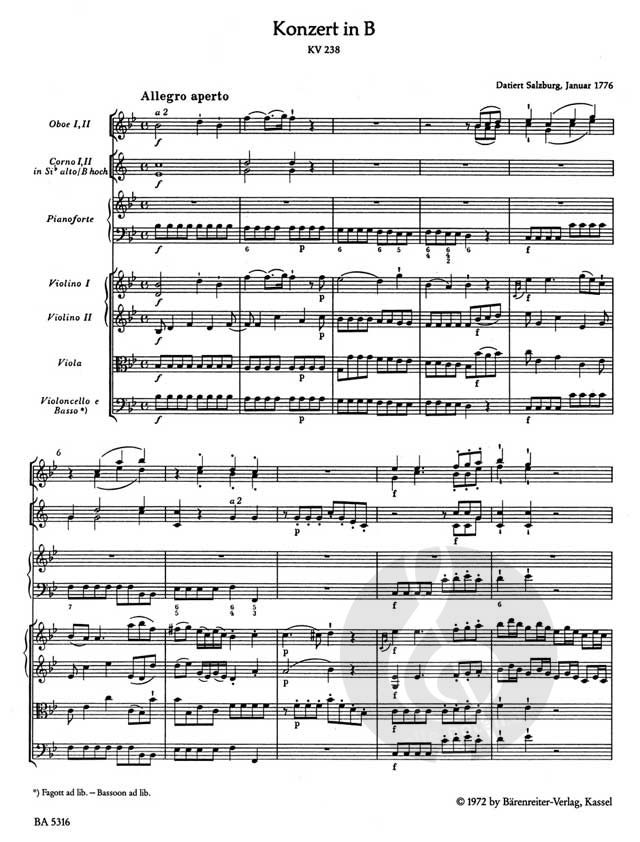
Urtext der Neuen Mozart-Ausgabe. Klavier Solo, Oboe (2)/ Flöte, Fagott, Horn (2), Streicher
Urtext der Neuen Mozart-Ausgabe. Klavier Solo, Oboe (2)/ Flöte, Fagott, Horn (2), Streicher
- Piano y orquesta
- Partitura general (Urtext)
- Bärenreiter Verlag
-
disponible en 2-4 días laborables
- También disponible para descarga.
disponible en 2-4 días laborables
Urtext der Neuen Mozart-Ausgabe. Klavier Solo, Oboe (2)/ Flöte, Fagott, Horn (2), Streicher
Urtext der Neuen Mozart-Ausgabe. Klavier Solo, Oboe (2)/ Flöte, Fagott, Horn (2), Streicher
- Piano y orquesta
- Partitura (Urtext) Descargar
- Bärenreiter Verlag
-
Inmediatamente disponible
Descargar inmediatamente al finalizar la orden - Descarga instantánea
Inmediatamente disponible
| Descargar inmediatamente al finalizar la orden
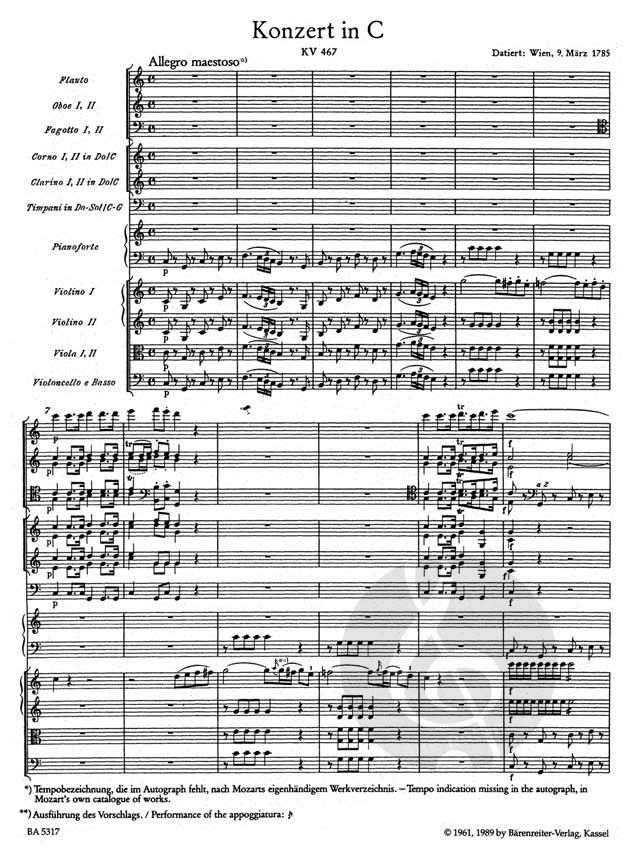
Los conciertos para piano y orquesta de Wolfgang Amadeus Mozart representan este género, entonces aún joven, a la perfección clásica. Entre las obras más bellas, que están a la altura de sus grandes s...
Los conciertos para piano y orquesta de Wolfgang Amadeus Mozart representan este género, entonces aún joven, a la perfección clásica. Entre las obras más bellas, que están a la altura de sus grandes s...
- Piano y orquesta
- Partitura (Urtext) Descargar
- Bärenreiter Verlag
-
Inmediatamente disponible
Descargar inmediatamente al finalizar la orden - Descarga instantánea
Inmediatamente disponible
| Descargar inmediatamente al finalizar la orden
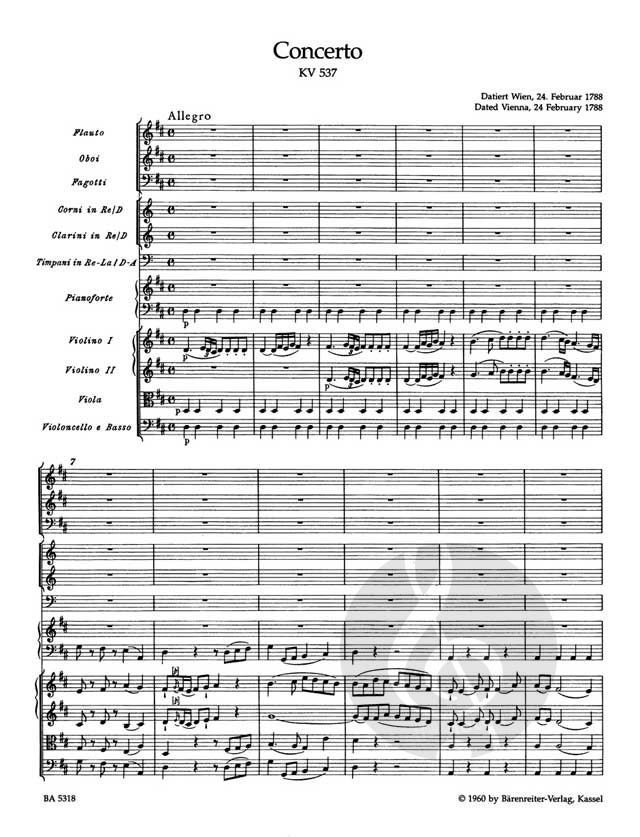
Konzert für Klavier und Orchester Nr. 26. Urtext der Neuen Mozart-Ausgabe. Klavier Solo, Flöte, Oboe (2), Fagott (2), Horn (2), Trompete (2), Pauke, Streicher - Partitur; Urtextausgabe
Konzert für Klavier und Orchester Nr. 26. Urtext der Neuen Mozart-Ausgabe. Klavier Solo, Flöte, Oboe (2), Fagott (2), Horn (2), Trompete (2), Pauke, Streicher - Partitur; Urtextausgabe
- Piano y orquesta
- Partitura general (Urtext)
- Bärenreiter Verlag
-
disponible en 2-4 días laborables
- También disponible para descarga.
disponible en 2-4 días laborables
Konzert für Klavier und Orchester Nr. 26. Urtext der Neuen Mozart-Ausgabe. Klavier Solo, Flöte, Oboe (2), Fagott (2), Horn (2), Trompete (2), Pauke, Streicher - Partitur; Urtextausgabe
Konzert für Klavier und Orchester Nr. 26. Urtext der Neuen Mozart-Ausgabe. Klavier Solo, Flöte, Oboe (2), Fagott (2), Horn (2), Trompete (2), Pauke, Streicher - Partitur; Urtextausgabe
- Piano y orquesta
- Partitura (Urtext) Descargar
- Bärenreiter Verlag
-
Inmediatamente disponible
Descargar inmediatamente al finalizar la orden - Descarga instantánea
Inmediatamente disponible
| Descargar inmediatamente al finalizar la orden
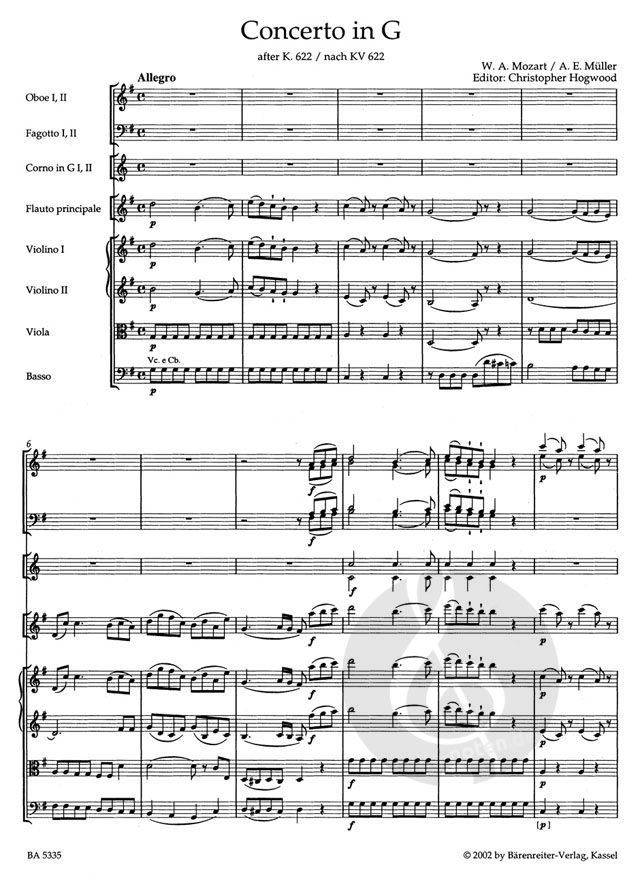
Flöte Solo, Oboe (2), Fagott (2), Horn (2), Streicher - Partitur
Flöte Solo, Oboe (2), Fagott (2), Horn (2), Streicher - Partitur
- Flauta travesera y orquesta
- Partitura general
- Bärenreiter Verlag
-
disponible en 2-4 días laborables
- También disponible para descarga.
disponible en 2-4 días laborables
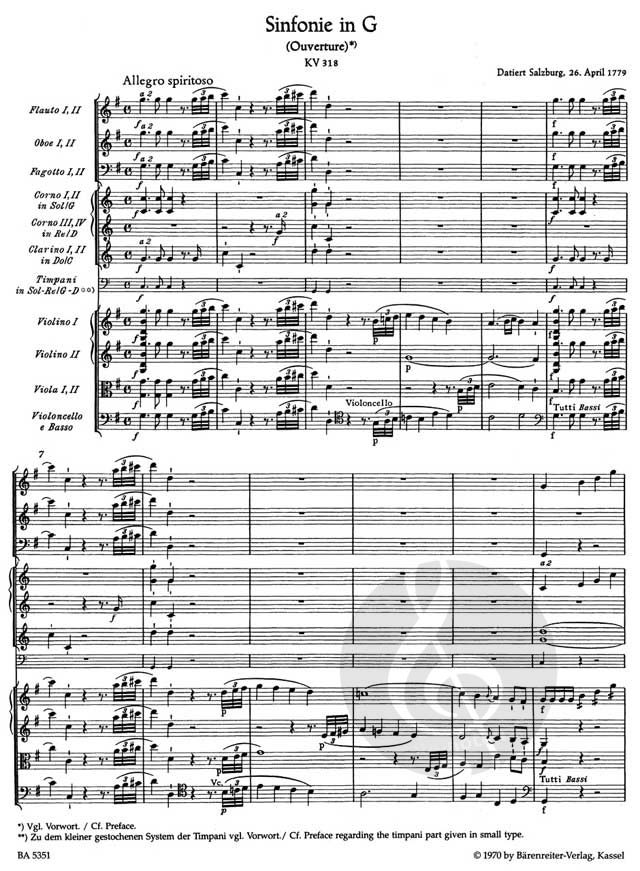
Urtext der Neuen Mozart-Ausgabe. Flöte (2), Oboe (2), Fagott (2), Horn (2), Trompete (2), Pauke, Streicher - Partitur; Urtextausgabe
Urtext der Neuen Mozart-Ausgabe. Flöte (2), Oboe (2), Fagott (2), Horn (2), Trompete (2), Pauke, Streicher - Partitur; Urtextausgabe
- Orquesta
- Partitura general (Urtext)
- Bärenreiter Verlag
-
disponible en 2-4 días laborables
- También disponible para descarga.
disponible en 2-4 días laborables
.jpg "Wolfgang Amadeus Mozart")
Partituras de Wolfgang Amadeus Mozart
Joannes Chrysostomus Wolfgangus Theophilus Mozart (*27 de enero de 1756 en Salzburgo, † 5 de diciembre de 1791 en Viena), o Wolfgang Amadeus Mozart (o Amadé, como el propio compositor firmaba sus obras y cartas) fue un compositor del "período clásico vienés", caracterizado por elementos estilísticos del sur de Alemania e Italia de la segunda mitad del siglo XVIII. También se puede encontrar polifonía barroca en algunas de sus composiciones (Final del Cuarteto de cuerda en sol mayor, KV 387, Final de la Sinfonía "Júpiter", KV 551).
A W.A. Mozart se le atribuyen en total unas 60 sinfonías, 30 conciertos para piano y cinco conciertos para violín, además de otros conciertos para instrumentos solistas, numerosas obras de cámara, un extenso repertorio de composiciones musicales para piano y canciones artísticas.
Para el público vienés, Mozart creó Singspiele en alemán como La flauta mágica (KV 620) con un alto valor de entretenimiento y alusiones a su pertenencia a la Logia Masónica, así como óperas en italiano como Le nozze de Figaro (KV 492); Mozart compuso un total de 21 óperas y singspiels.
Mozart también fue un importante representante de su época en la música eclesiástica; además de 17 misas, creó cantatas, oratorios, vísperas y, probablemente, su obra más importante, el Requiem en re menor (KV 626), que ya no fue terminada por el propio Mozart, sino por Joseph Eybler y Franz Xaver Süßmayr, alumno de Mozart, por encargo de Constanze Mozart (viuda del compositor).
Puede buscar títulos concretos de Wolfgang Amadeus Mozart en nuestra tienda online. Una búsqueda por el número de catálogo Köchel (por ejemplo, KV 525 para Música de una noche, la Serenata nº 13 para cuerdas en sol mayor) también le llevará a la obra deseada.
[Crédito de la imagen: Mozart c. 1780, detalle del retrato de Johann Nepomuk della Croc (detalle); Fuente: Fuente desconocida; © Johann Nepomuk della Croce, Dominio público, vía Wikimedia Commons]
