
Georg Friedrich Händel
La Bellezza ravveduta nel trionfo del Tempo e del Disinganno HWV 46a
Oratorio in 2 Parts

Georg Friedrich Händel
La Bellezza ravveduta nel trionfo del Tempo e del Disinganno HWV 46a
Oratorio in 2 Parts
- Formación Solistas (SSAT)
- Edición Reducción de piano (Urtext)
- Compositor Georg Friedrich Händel
- Adaptador Christopher Sokolowski
- Editorial Bärenreiter Verlag
- Serie Bärenreiter Urtext
- Editor Michael Pacholke
- Redactor Benedetto Pamphili
- Nº de pedido BA10721-90
IVA incluido.,
Más gastos de envío
 en stock
|
disponible en 1-3 días laborables
Descripción:
Handel composed his first Italian oratorio 'La Bellezza ravveduta nel trionfo del Tempo e del Disinganno' in 1707. It is based on an allegorical moral libretto written by Cardinal Benedetto Pamphili who also commissioned this work.
Disinganno (Illumination) and Tempo (Time) try to get the young, beautiful and frivolous Bellezza (Beauty) to recognise the true values of life and to act accordingly. The audience accompanies Bellezza in her spiritual development, in which she increasingly distances herself from Piacere (Pleasure) and listens more and more to Tempo and Disinganno.
The oratorio contains some of the most beautiful music Handel ever composed. This includes the enchanting aria 'Lascia la spina', in which he uses the music of the sarabande from the opera 'Almira', composed in Hamburg in 1704, and which then achieved immortal fame in 'Rinaldo' (1711) as 'Lascia ch'io pianga'.
-
Besetzung - Ensemble
-
Annette Landgraf Vorwort
-
Annette Landgraf Preface
-
Verzeichnis der Nummern - Index of numbers
-
Sonaten-Ouvertüre
-
Erster Teil
-
Zweiter Teil
-
Anhang - Appendix
Los clientes han valorado este artículo:
Bärenreiter-Verlag Karl Vötterle GmbH & Co. KG
Heinrich-Schütz-Allee 35-37
34131
Kassel
Deutschland
Partituras desde 1969
Desde 1969, más de 500.000 clientes confían en nosotros. Con una enorme selección de más de 1.000.000 de partituras, somos uno de los mayores proveedores de Europa. Gracias a nuestro gran stock, a menudo podemos enviar partituras en 24 horas. Sea cual sea la partitura que busque: ¡está en el lugar correcto!
Atentamente, Stefanie Reichert
Responsable de atención al cliente
Artículos relacionados:

- Solistas (SSAT) y orquesta
- Partitura general (Urtext)
- Bärenreiter Verlag
-
disponible en 2-4 días laborables
Otros clientes también compraron:

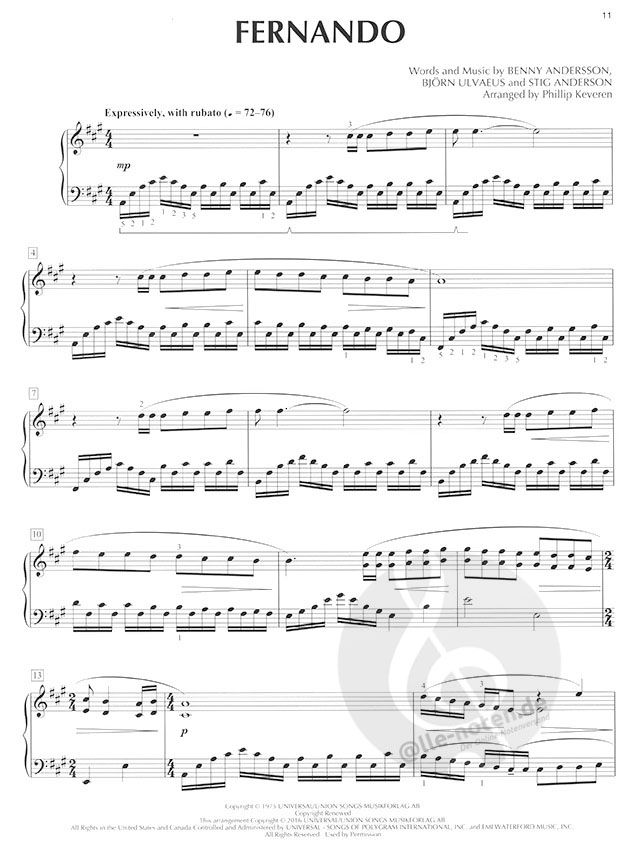
- Piano
- Partituras
- Phillip Keveren
-
disponible en 3-6 días laborables

Gottfried August Homilius
Passionskantate, nach der Poesie des Herrn Buschmann HoWV I.2
- Solistas, coro mixto (SATB) y piano
- Reducción de piano
-
en stock
|
disponible en 1-3 días laborables
- También disponible para descarga.

- Violín y piano
- Reducción de piano con partichela(s)
-
disponible en 3-4 semanas
- También disponible para descarga.

Giovanni Battista Viotti
- Dúo de violines
- Partituras
-
disponible en 4-8 días laborables

Giovanni Battista Viotti
- Dúo de violines
- Partituras
-
disponible en 2-4 días laborables

- Trompeta y piano
- Partituras
-
disponible en 3-6 días laborables

Domenico Zipoli
- Piano
- Partituras
-
en stock
|
disponible en 1-3 días laborables

- Coro masculino (TTBB) y conjunto
- Partitura general
-
disponible en 4-8 días laborables

Giovanni Battista Viotti
- Dúo de violines
- Partituras
-
disponible en 2-4 días laborables

- Violín y piano
- Partituras
- Jenő Hubay
-
en stock
|
disponible en 1-3 días laborables

by Hubay and Sarasate for Violin and Piano
- Violín y piano
- Partituras
-
disponible en 3-4 semanas

- Violín, trompa y piano
- Partitura general y partichelas
-
en stock
|
disponible en 1-3 días laborables
- También disponible para descarga.

Pablo de Sarasate
for violin and piano with marked and unmarked string part
- Violín y piano
- Partitura de piano y partichela(s) (Urtext)
- Ingolf Turban
-
en stock
|
disponible en 1-3 días laborables

- Orquesta
- Partitura general de estudio
-
disponible en 3-4 semanas


- Dúo de violines
- Set de partichelas
-
en stock
|
disponible en 1-3 días laborables