
Mike Rossi
Ensemble Mix: Kwazulu Sam
Kwela Style (South Africa)

Ver
PDF
Recomendar
Recomendar artículo
Mike Rossi
Ensemble Mix: Kwazulu Sam
Kwela Style (South Africa)
- Formación Combo (3 instrumentos de viento y sección rítmica)
- Edición Partitura general y partichelas
-
Dificultad
- Compositor Mike Rossi
- Editorial Advance Music
- Serie Ensemble Mix
- Nº de pedido ADV17050
IVA incluido.,
Más gastos de envío
 en stock
|
disponible en 1-3 días laborables

Descripción:
As an American jazz artist and educator based in South Africa since 1999, this is one in a set of pieces that reflect my musical and other experiences in this fascinating country. Kwazulu Zam was composed using a traditional South African song form called mbaquanga. Mbaquanga is a characteristic South African musical form that utilises a repeated (cyclical) 2 or 4-measure harmonic structure based on I - IV - V - I and I - IV - 1 6/4 - V - I. These progressions are the backbone of South African jazz much like the blues and its variants is to American jazz. The piece is performed in the kwela style which is based on a strong swing feel. The original meaning for kwela during less fortunate times was 'kwela-kwela; hurry, hurry, the police are on the way.' Much like early jazz and throughout the swing period, the use of riff based playing and soloing was common. Bennie Moten's and Count Basie's early bands come to mind, and are just two examples of great riff based ensembles with exciting riff based soloing. Performance Tips The melodies or riffs in Kwazulu Zam must swing. Play them with a loose, relaxed feel. Really dip or slide into the notes that are marked. Intervals of a fifth or larger marked with slides should really be scooped and vocal in nature. Please note that African music and particularly South African jazz, is vocal and organic in nature. This tune is written in the Kwela/Swing style. It can also be played on a more traditional Mbaqango style. To get to know Kwela you can listen to recordings by Hugh Masekela, Darius Brubeck and Afro Cool Concept; also Paul Simon's 'Graceland,' for a better understanding of Mbaqango. Notes on Soloing Pay attention to the rhythm of the themes; play off rhythms found in the piece as well as playing rhythmically. The solo improvisation section at letter C should pay particular attention to the use of, and drawing from the three themes of the piece. Backgrounds and interludes can be very flexible. For example, B and C can be cued by signaling the number 1 for the background at letter B. Signal 2 for the background at C or 3 for both B and C. A closed fist indicates the last time when repeated more than once. Letters B & C can be played between solos or as a background building to the next soloist or just optionally letter C between solos. The solo background at letter C also has the option of being repeated more than once if your soloist is cooking and your rhythm section is grooving! Experiment too with dynamic shapes during repeated backgrounds that will add excitement to the background and influence the soloist. Even experiment with interchanging letters B & C as solo backgrounds. It is important to note that playing contemporary jazz phrases or licks really doesn't work and is out of context or style of the piece. Play in the style, play rhythmically, use material from the three themes to develop and build your solo. Most importantly have fun!!! Mike Rossi
Los clientes han valorado este artículo:
Partituras desde 1969

Desde 1969, más de 500.000 clientes confían en nosotros. Con una enorme selección de más de 1.000.000 de partituras, somos uno de los mayores proveedores de Europa. Gracias a nuestro gran stock, a menudo podemos enviar partituras en 24 horas. Sea cual sea la partitura que busque: ¡está en el lugar correcto!
Atentamente, Stefanie Reichert
Responsable de atención al cliente
Otros clientes también compraron:

A mix and match collection of 19 trio arrangements (for any combination of instruments)
- Conjunto flexible (3 instrumentos)
- Partichela de piano
- James Power
-
en stock
|
disponible en 1-3 días laborables

A mix and match collection of 19 trio arrangements (for any combination of instruments)
- Conjunto flexible (3 instrumentos)
- Partichela de la 3a parte vientos
- James Power
-
disponible en 3-6 días laborables

Die größten Hits - für Deine Band spielerisch leicht gesetzt!
- Conjunto flexible (3-4 instrumentos y sección rítmica)
- Partituras
- Uwe Bye
-
en stock
|
disponible en 1-3 días laborables

Martin Klaschka
- Trío de viento
- Partitura general y partichelas
-
disponible en 3-6 días laborables

Solo-Duet-Trio-Quartet with Optional Accompaniment
- Conjunto flexible (1-4 instrumentos)
- CD
- Victor López
-
en stock
|
disponible en 1-3 días laborables

- Conjunto flexible (3-5 instrumentos)
- Partituras
-
disponible en 2-5 días laborables

- 4-8 instrumentos de viento metal
- Partitura(s) general(es) de conjunto
- Klaus Winkler
-
disponible en 4-8 días laborables

- Conjunto flexible (3 instrumentos)
- Partituras
- Scott Richards
-
disponible en 1-2 semanas
- También disponible para descarga.


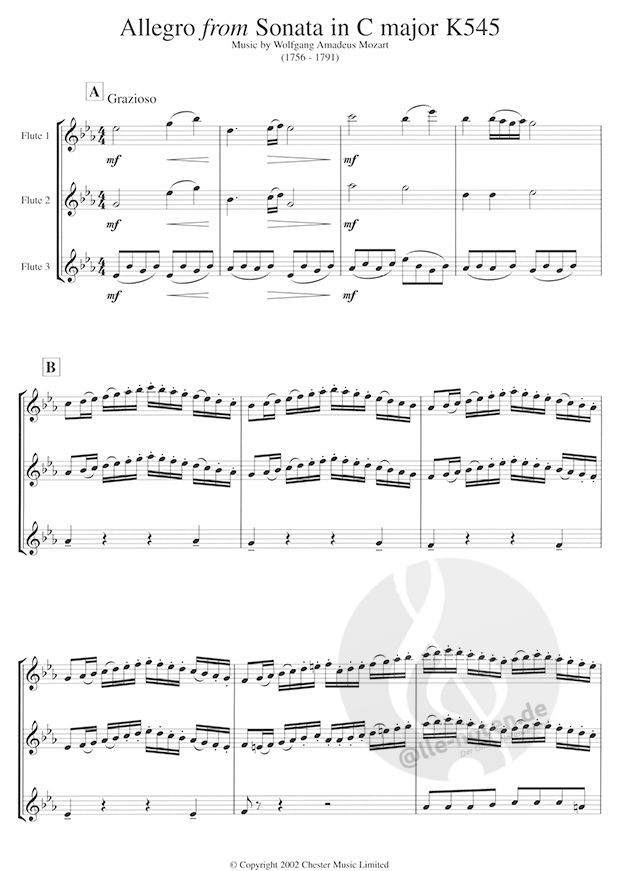
A mix and match collection of 19 trio arrangements (for any combination of instruments)
- Conjunto flexible (3 instrumentos)
- Partichela de 3 flautas traveseras
- James Power
-
disponible en 3-6 días laborables