
Jacob Gade, Carlos Gardel, Eduard Pütz, Sebastian de Yradier
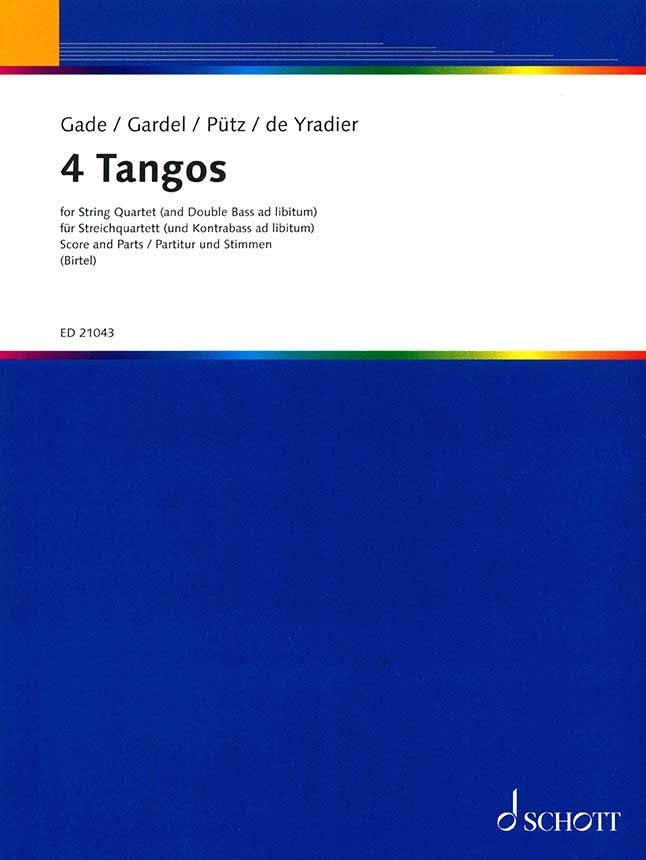
4 Tangos
for String Quartet (and Double Bass ad lib.)

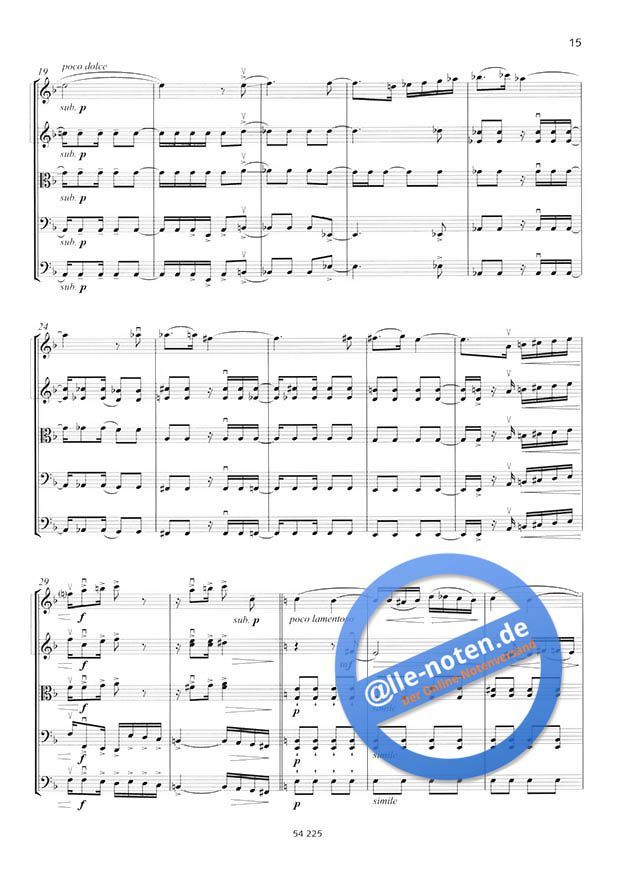
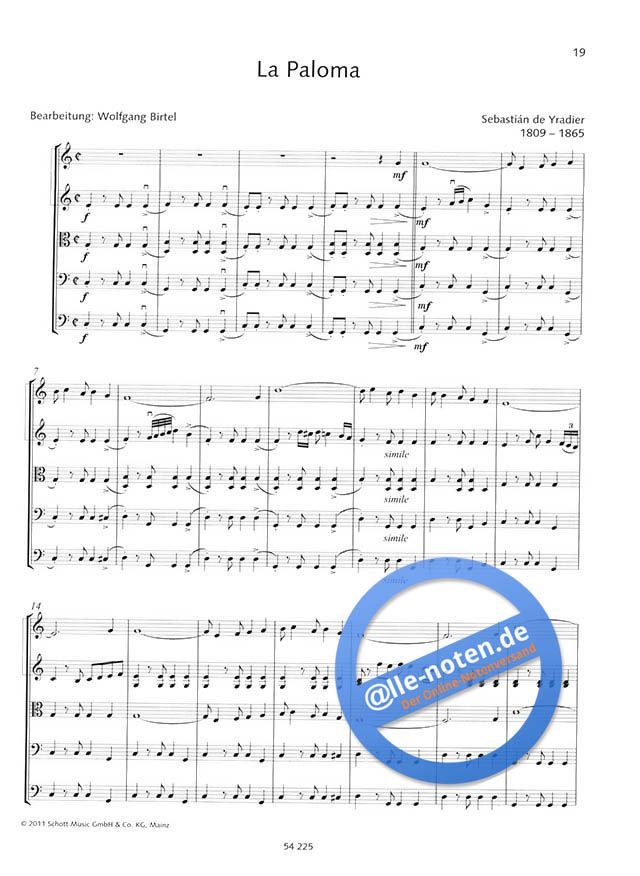
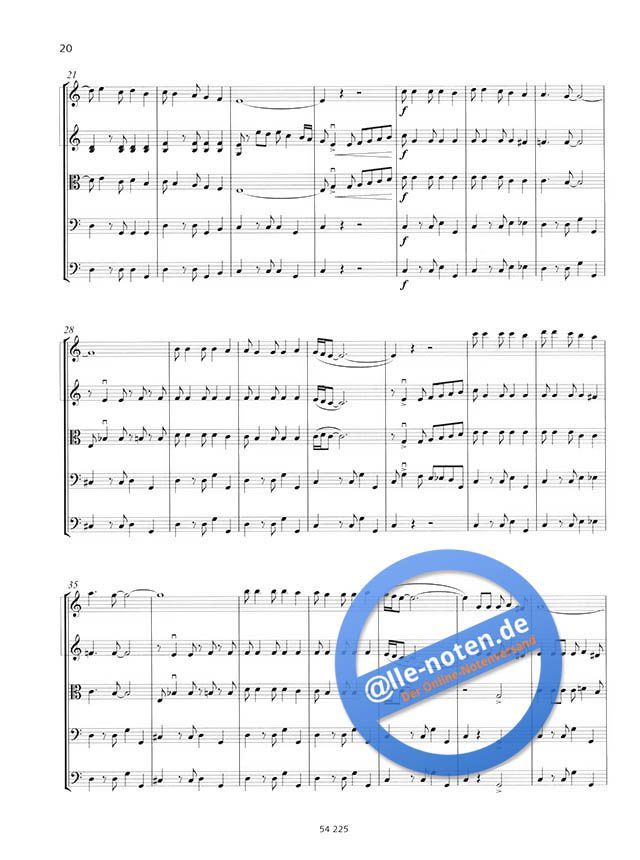
Jacob Gade, Carlos Gardel, Eduard Pütz, Sebastian de Yradier
4 Tangos
for String Quartet (and Double Bass ad lib.)
- Formación Cuarteto de cuerda (2 violines, viola y violonchelo)
- Formación optativa Quinteto de cuerda (2 violines, viola, violonchelo y contrabajo)
- Compositor Jacob Gade Carlos Gardel Eduard Pütz Sebastian de Yradier
- Adaptador Wolfgang Birtel
-
Dificultad
- Edición Partitura general y partichelas
- Editorial Schott Musik
- Nº de pedido ED21043
 en stock
disponible en 1-3 días laborables
IVA incluido.,
Más gastos de envío
No disponible en todos los países. Leer más

Descripción de la:
Tango - a dance, a music genre, an awareness of life, 'a sad thought that can be danced' (according to a tango composer). The terms and definitions are as varied as the range of styles of the works.
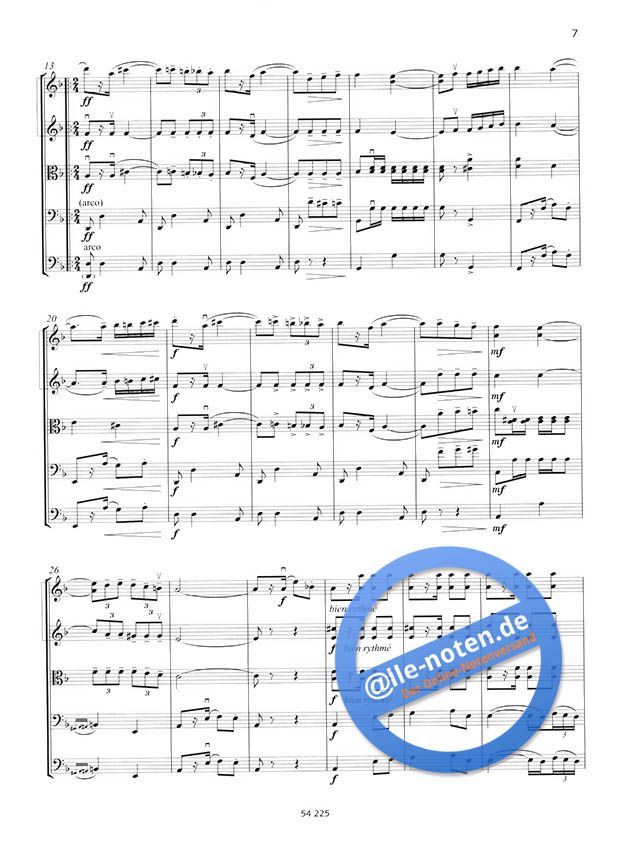
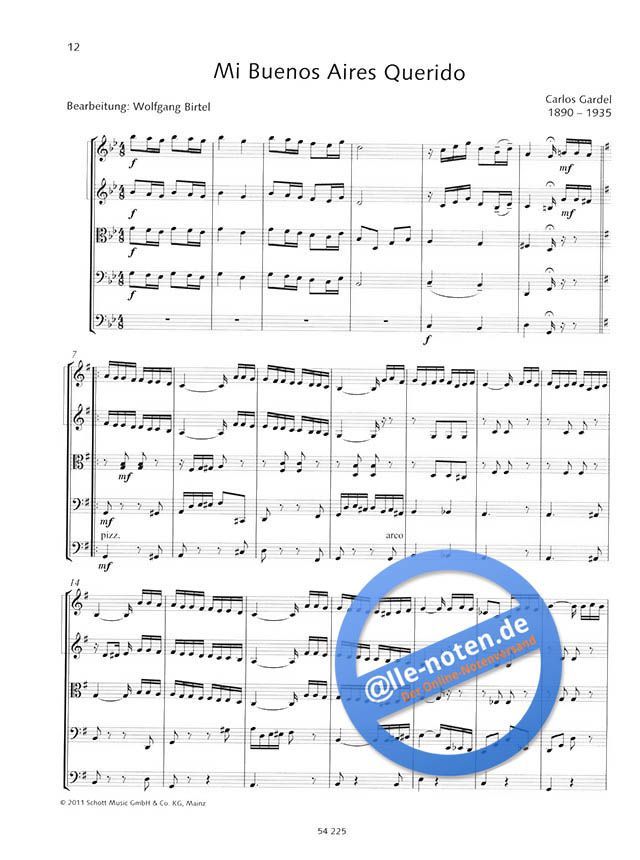
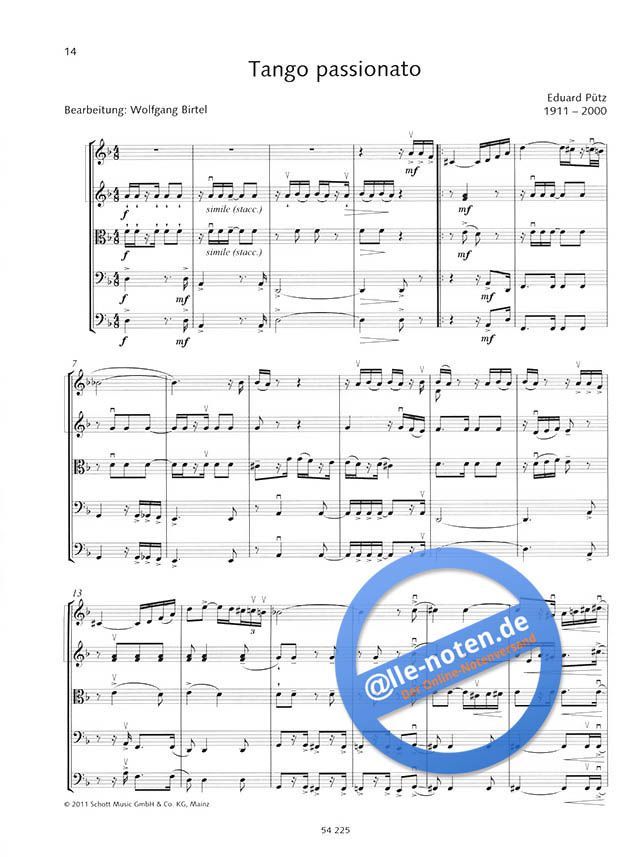
The present volume deliberately presents four entirely different characters: 'Jalousie' by the Danish composer Jacob Gade which probably is the best-known dance tango; 'Mi Buenos Aires Querido', a work by the classical Argentine composer Carlos Gardel; 'Tango appassionato' by Eduard Pütz, a 'tango nuevo' in the tradition of Astor Piazzolla; and finally, 'La Paloma' by Sebastián der Yradier, a tango arrangement of the title that, according to GEMA, is the most popular melody of the 19th century.
The arrangements for string quartet are melodious and easy to play, a delight for both performers and audience alike.
A double-bass part (ad libitum) is included to complement the sound.
The present volume deliberately presents four entirely different characters: 'Jalousie' by the Danish composer Jacob Gade which probably is the best-known dance tango; 'Mi Buenos Aires Querido', a work by the classical Argentine composer Carlos Gardel; 'Tango appassionato' by Eduard Pütz, a 'tango nuevo' in the tradition of Astor Piazzolla; and finally, 'La Paloma' by Sebastián der Yradier, a tango arrangement of the title that, according to GEMA, is the most popular melody of the 19th century.
The arrangements for string quartet are melodious and easy to play, a delight for both performers and audience alike.
A double-bass part (ad libitum) is included to complement the sound.
-
Jacob Gade Jalousie. Tango Tzigane
-
Carlos Gardel La Paloma
-
Eduard Pütz Mi Buenos Aires querido
-
Sebastian de Yradier Tango passionato
Artículos relacionados:
Los clientes han valorado este artículo:
Información del Fabricante:
Schott Music GmbH & Co. KG
Weihergarten 5
55116
Mainz
Deutschland
Otros clientes también compraron:
- Violín y orquesta de cuerda
- Partitura general y partichelas
- Robert Longfield
-
en stock
disponible en 1-3 días laborables - También disponible para descarga.

- Cuarteto de Cuerda
- Partitura general y partichelas para descargar
- Wolfgang Birtel
-
Inmediatamente disponible
Descargar inmediatamente al finalizar la orden
for String Quartet or String Orchestra (medium)
- Cuarteto de Cuerda
- Partituras
-
disponible en 3-4 semanas
- Orquesta de salón
- Partituras
-
disponible en 2-4 días laborables
- Quinteto de cuerda (2 violines, viola, violonchelo y contrabajo)
- Partitura general y partichelas
- Frédéric Quinet
-
disponible en 3-4 semanas
Johann Sebastian Bach
eingerichtet für Streichquartett oder Streichorchester
- Cuarteto de cuerda (2 violines, viola y violonchelo)
- Set de partichelas
- Richard Klemm Carl Weymar
-
disponible en 4-8 días laborables
- Violonchelo y piano
- Partituras
-
en stock
disponible en 1-3 días laborables
Giuseppe Verdi
- Cuarteto de cuerda (2 violines, viola y violonchelo)
- Set de partichelas (Urtext)
-
en stock
disponible en 1-3 días laborables
- Cuarteto de cuerda
- Partitura general y partichelas
-
en stock
disponible en 1-3 días laborables
The Beatles
- Cuarteto de Cuerda
- Partitura general y partichelas
- Larry Moore
-
en stock
disponible en 1-3 días laborables - También disponible para descarga.
Johann Strauss (Sohn)
Walzer für Streichquartett und Kontrabass ad libitum (Der Musikalische Salon Vol. 71)
- Cuarteto de cuerda (2 violines, viola y violonchelo)
- Partitura general y partichelas
- Wolfgang Birtel
-
en stock
disponible en 1-3 días laborables
Felix Mendelssohn Bartholdy
- Cuarteto de cuerda (2 violines, viola y violonchelo)
- Set de partichelas (Urtext)
-
en stock
disponible en 1-3 días laborables
Luigi Boccherini
- Cuarteto de Cuerda
- Partituras
-
disponible en 3-4 semanas
- También disponible para descarga.

John Williams, Patrick Doyle, Nicholas Hooper, Alexandre Desplat
Complete Film Series
- Violín
- Partituras y audio online
-
en stock
disponible en 1-3 días laborables




- Dúo de flautas traveseras
- Partitura(s) general(es) de conjunto
-
en stock
disponible en 1-3 días laborables - También disponible para descarga.