
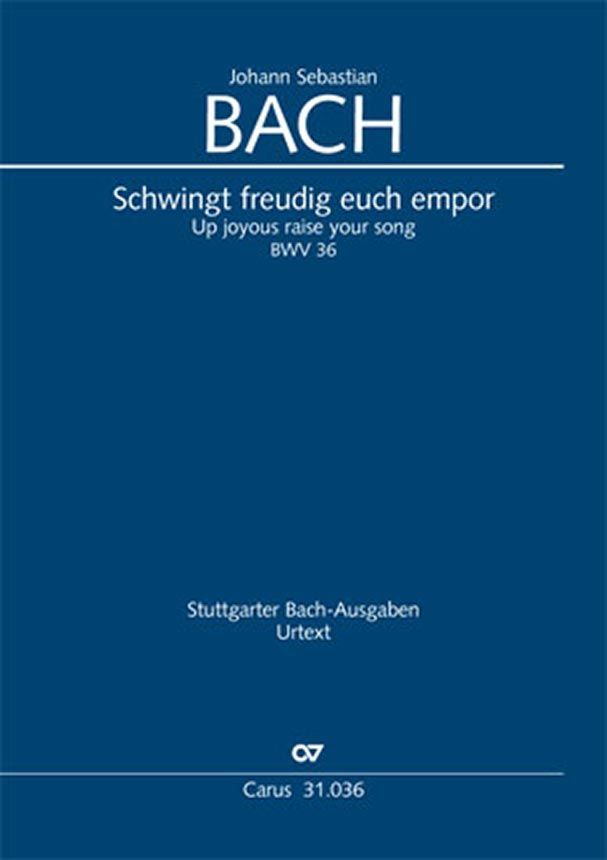
Johann Sebastian Bach
Schwingt freudig euch empor BWV 36
Kantate zum 1. Advent für Soli (SATB), Chor (SATB), 2 Oboen d'amore, 2 Violinen, Viola und Basso continuo
Ver
PDF
Johann Sebastian Bach
Schwingt freudig euch empor BWV 36
Kantate zum 1. Advent für Soli (SATB), Chor (SATB), 2 Oboen d'amore, 2 Violinen, Viola und Basso continuo
- Formación Solistas (SATB), coro mixto (SATB), 2 oboes d'amore, 2 violines, viola y bajo continuo
- Compositor Johann Sebastian Bach
- Editor Klaus Hofmann
-
Dificultad
- Edición Partitura general para descargar
- Editorial Carus-Verlag
- Nº de pedido CV31036-00-DL
 Inmediatamente disponible
Descargar inmediatamente al finalizar la orden
IVA incluido.,
Más gastos de envío
- Escala de cantidades:
- desde 20 Unidades 1,30 €
- desde 30 Unidades 1,26 €
- desde 50 Unidades 1,12 €
- desde 100 Unidades 1,05 €
No disponible en todos los países. Leer más
Descripción de la:
Bach's well-known church cantata 'Schwingt freudig euch empor' BWV 36 (Up joyous raise your song), first heard in its final version on First Advent Sunday in 1731 at the Leipzig Nikolaikirche, can be traced back to a secular birthday cantata from 1725. The text is now revised to render the events of Advent - the rejoicing of the opening chorus, the loving veneration and the warm-hearted welcome of the three solo arias retained from the original cantata now all apply to the Messiah, who, as once in Jerusalem, should find a place in the hearts of the faithful. However, their unmistakeable Advent character derives from the fact that Bach contrasts the four 'festive' settings from the secular cantata with three strophes from Luther's Advent chorale, 'Nun komm, der Heiden Heiland', thus at the same time giving a voice to the Mystery of God made man.
-
Schwingt freudig euch empor Up joyous raise your song
-
Nun komm, der Heiden Heiland Come thou of man the Saviour
-
Die Liebe zieht mit sanften Schritten In gentle fashion love endeavours
-
Zwingt die Saiten in Cythara Strike strong the strings on lute and lyre
-
Willkommen, werter Schatz All hail thou, heart's delight
-
Der du bist dem Vater gleich Thou the Father of us all
-
Auch mit gedämpften, schwachen Stimmen Tho' with unworthy feeble voices
-
Lob sei Gott dem Vater ton Praise to God sing ev'ry one
Artículos relacionados:
Así es como funciona la descarga:
1 Encargar artículos de descarga
Encargue los artículos deseados en nuestra tienda en línea.
2 Confirmación del pedido con enlace de descarga
Inmediatamente después de completar su pedido, recibirá una confirmación por correo electrónico con la lista de todos los artículos. Encontrará el enlace de descarga junto a cada artículo. Con este enlace puede iniciar la descarga de inmediato. Por favor, revise también su carpeta de spam si es necesario.
Los clientes han valorado este artículo:
Información del Fabricante:
Carus-Verlag GmbH & Co. KG
Sielminger Str. 51
70771
Leinfelden-Echterdingen
Deutschland
Otros clientes también compraron:
Ludwig van Beethoven
- Piano a 4 manos
- Partituras (Urtext)
- Andreas Groethuysen
-
en stock
disponible en 1-3 días laborables
Johann Sebastian Bach
Kantate zum 1. Advent für Soli (SATB), Chor (SATB), 2 Oboen d'amore, 2 Violinen, Viola und Basso continuo
- Solistas (SATB), coro mixto (SATB), 2 oboes d'amore, 2 violines, viola y bajo continuo
- Reducción de piano
-
en stock
disponible en 1-3 días laborables - También disponible para descarga.
- Solistas, coro mixto (SATB), instrumentos de cuerda y órgano
- Partitura general
-
en stock
disponible en 1-3 días laborables - También disponible para descarga.
- Solistas, coro mixto (SATB) y piano
- Reducción de piano
-
disponible en 2-5 días laborables
- También disponible para descarga.
- Solistas, coro mixto (SATB) y piano
- Reducción de piano
-
en stock
disponible en 1-3 días laborables - También disponible para descarga.
- Solistas, coro mixto (SATB), 2 oboes, instrumentos de cuerda y órgano
- Partitura general
-
disponible en 2-5 días laborables
- También disponible para descarga.
- Solistas, coro mixto (SATB), 3 trompetas, 2 oboes, timbales, instrumentos de cuerda y órgano
- Partitura general
-
disponible en 2-5 días laborables
- También disponible para descarga.
Edward Elgar
- Coro mixto (SATB) y órgano
- Partituras
-
disponible en 3-4 semanas


Josef Gabriel Rheinberger
für eine tiefe Stimme (Alt oder Bass) und Orgel
- Voz (grave) y órgano
- Partitura de órgano
-
en stock
disponible en 1-3 días laborables