
Georg Friedrich Händel
Hallelujah' Chorus
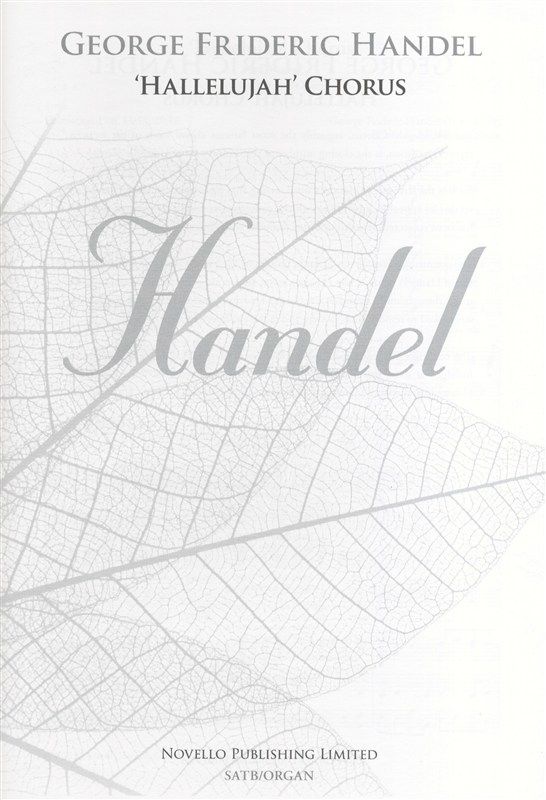
Georg Friedrich Händel
Hallelujah' Chorus
- Formación Coro mixto (SATB) y órgano
- Compositor Georg Friedrich Händel
- Adaptador Watkins Shaw
- Serie Novello New Choral Engravings
- Edición Reducción de órgano
- Editorial Novello Publishing
- Nº de pedido NOV292325
 disponible en 3-4 semanas
IVA incluido.,
Más gastos de envío
No disponible en todos los países. Leer más

Descripción de la:
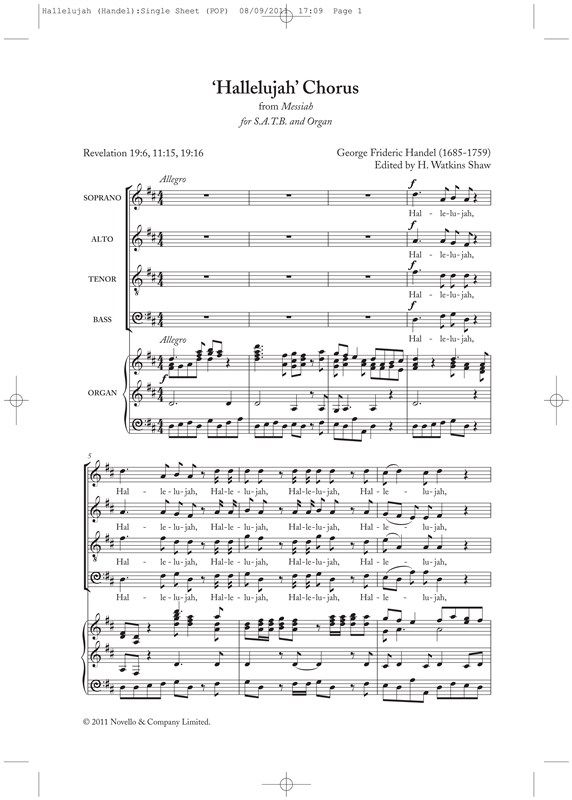
The 'Hallelujah' Chorus, arguably the most famous choral work of the western classical tradition, is the closing number of the second part of Handel's Messiah.
Such is the strength of Handel's word setting that this empathic, triumphal paean retains its appeal in spite of the cultural overexposure and controversy to which it has been subjected, remaining a firm favourite with choirs.
The premiere of Messiah was in Dublin in 1742 as the high point of a full season of Handel's work. It was a charity event, held in aid of local causes, and in order to get the maximum attendance at Neale's new music hall in Fishamble Street, men were asked to remove their swords, and ladies the hoops in their dresses.
The tradition of standing during performances of the 'Hallelujah' Chorus, still indulged at some performances in Britains, is said to have been started by King George II at the work's opening run in London in 1743.
Such is the strength of Handel's word setting that this empathic, triumphal paean retains its appeal in spite of the cultural overexposure and controversy to which it has been subjected, remaining a firm favourite with choirs.
The premiere of Messiah was in Dublin in 1742 as the high point of a full season of Handel's work. It was a charity event, held in aid of local causes, and in order to get the maximum attendance at Neale's new music hall in Fishamble Street, men were asked to remove their swords, and ladies the hoops in their dresses.
The tradition of standing during performances of the 'Hallelujah' Chorus, still indulged at some performances in Britains, is said to have been started by King George II at the work's opening run in London in 1743.