
Kimmo Hakola
Clarinet Concerto
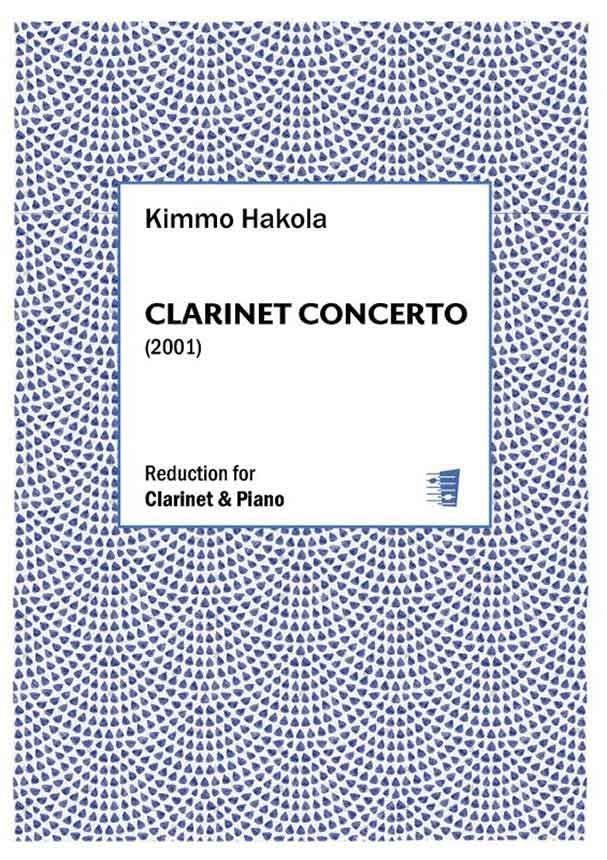
Ver
PDF
Kimmo Hakola
Clarinet Concerto
- Formación Clarinete y piano
- Compositor Kimmo Hakola
- Edición Reducción de piano con partichela(s)
- Editorial Fennica Gehrman
- Nº de pedido 9790550117082
 en stock
disponible en 1-3 días laborables
IVA incluido.,
Más gastos de envío
No disponible en todos los países. Leer más

Descripción de la:
Kimmo Hakola's Clarinet Concerto (2001) is finally available as a piano reduction and a solo part!
Hakolan Klarinettikonserton pianoreduktio vihdoin saatavilla!
--
The concerto created world-wide buzz after the premiere, which was augmented after the CD release. The Clarinet Concerto is a rich and original work lasting some 40 minutes. It has four movements: the opening movement is dominated by the aggressive toccata-like pounding typical of Hakola. The slow movement, Hidden Songs, is a soaring, melodic and captivating piece of music. The third movement, Allegro farara, is a wild and whirling Oriental dance in a quirky 7/8 rhythm. The finale, which follows without a break, begins with crowd noises that slowly fade. The movement title, Khasene, is the Yiddish for 'wedding'. The nuptials turn out to be quite raucous as Hakola rolls out poignant pathos and rollicking klezmer look-alikes in turn. The soloist is given scope for improvisation.
Hakolan Klarinettikonserton pianoreduktio vihdoin saatavilla!
--
The concerto created world-wide buzz after the premiere, which was augmented after the CD release. The Clarinet Concerto is a rich and original work lasting some 40 minutes. It has four movements: the opening movement is dominated by the aggressive toccata-like pounding typical of Hakola. The slow movement, Hidden Songs, is a soaring, melodic and captivating piece of music. The third movement, Allegro farara, is a wild and whirling Oriental dance in a quirky 7/8 rhythm. The finale, which follows without a break, begins with crowd noises that slowly fade. The movement title, Khasene, is the Yiddish for 'wedding'. The nuptials turn out to be quite raucous as Hakola rolls out poignant pathos and rollicking klezmer look-alikes in turn. The soloist is given scope for improvisation.