
Kenneth Hesketh
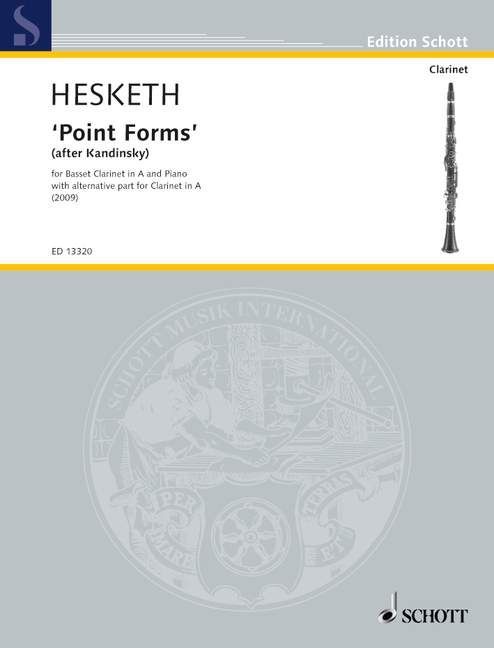
Point Forms
after Kandinsky
Escuchar
demo
Ver
1
PDF
Ver
2
PDF
Kenneth Hesketh
Point Forms
after Kandinsky
- Formación Clarinete en La
- Compositor Kenneth Hesketh
-
Dificultad
- Edición Partitura general y partichelas
- Editorial Schott Musik
- Nº de pedido ED13320
 en stock
disponible en 1-3 días laborables
IVA incluido.,
Más gastos de envío
No disponible en todos los países. Leer más

Descripción de la:
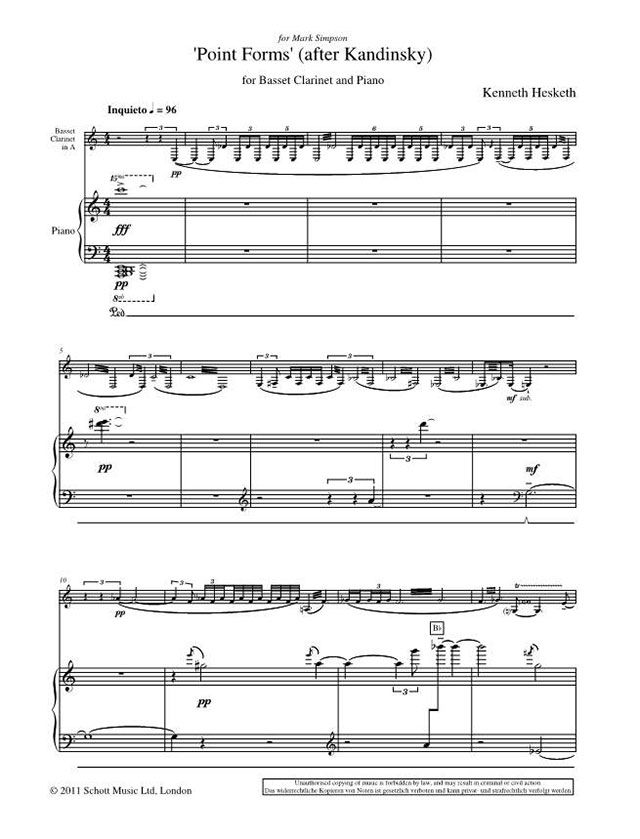
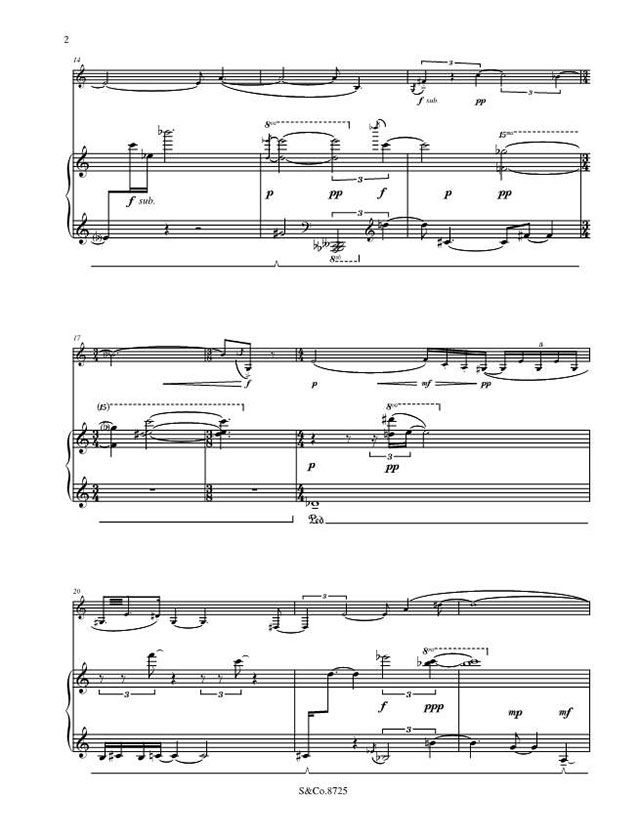
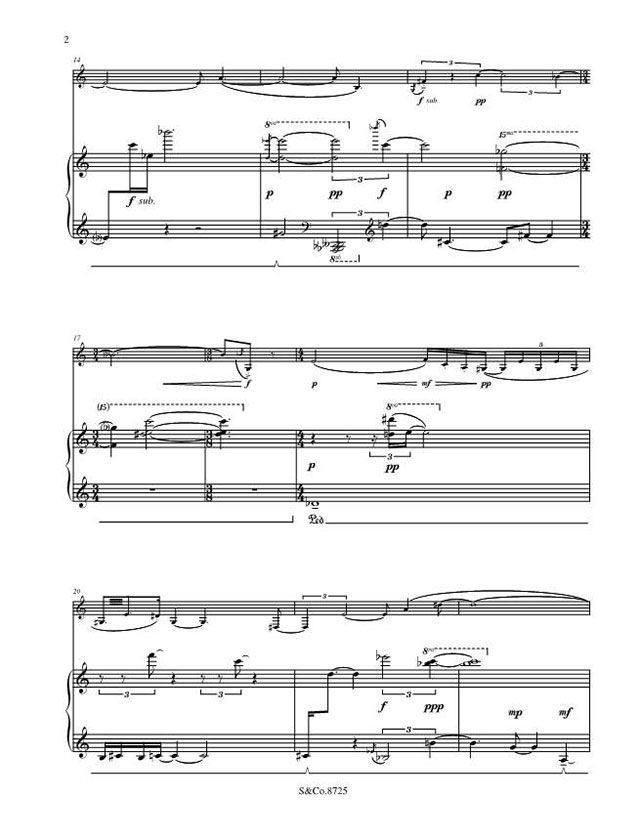
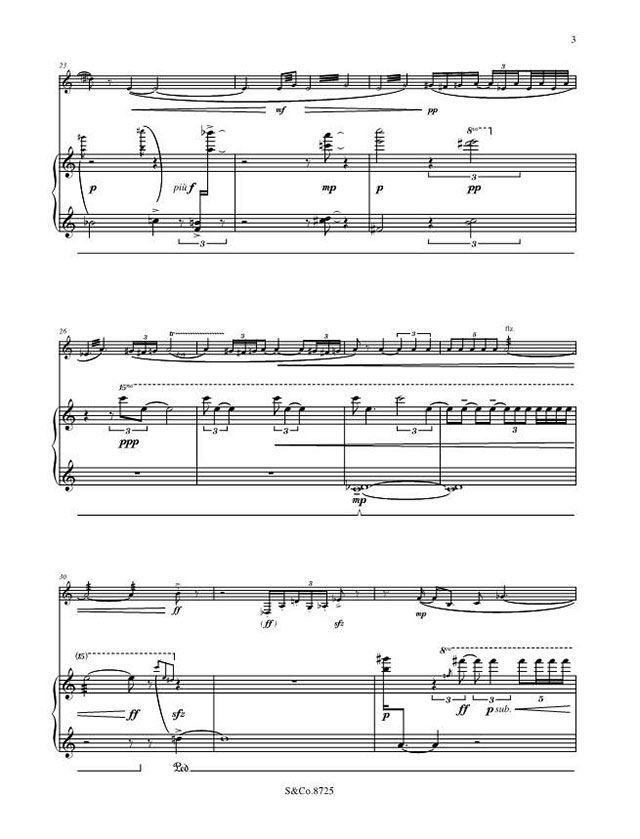
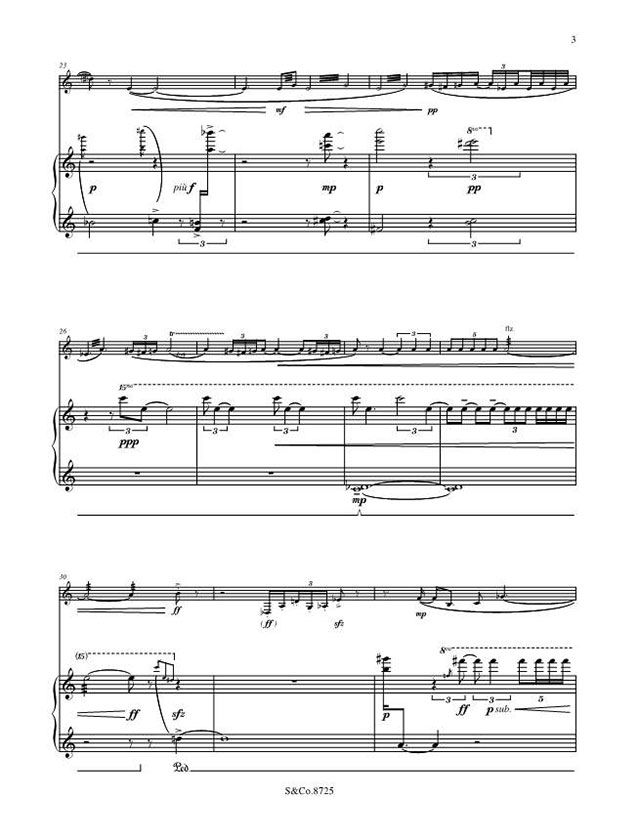
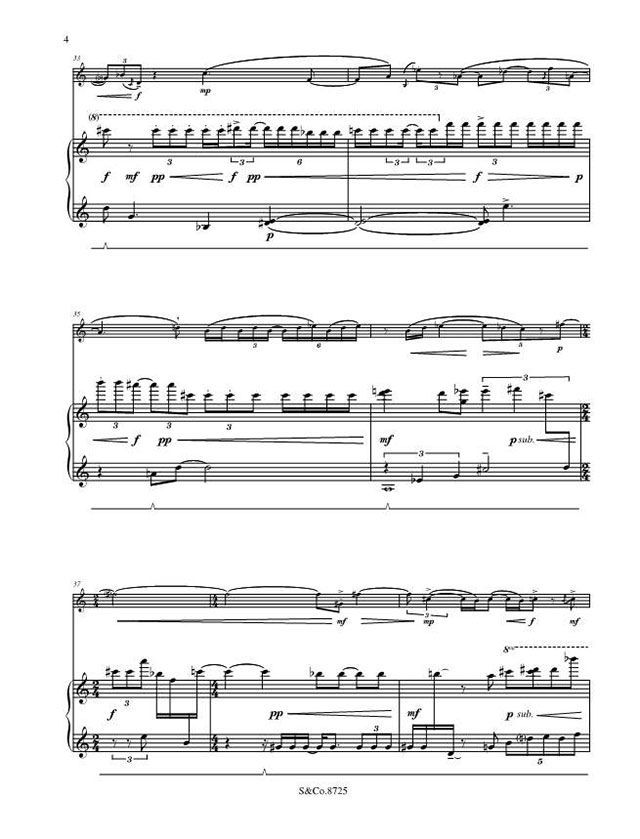
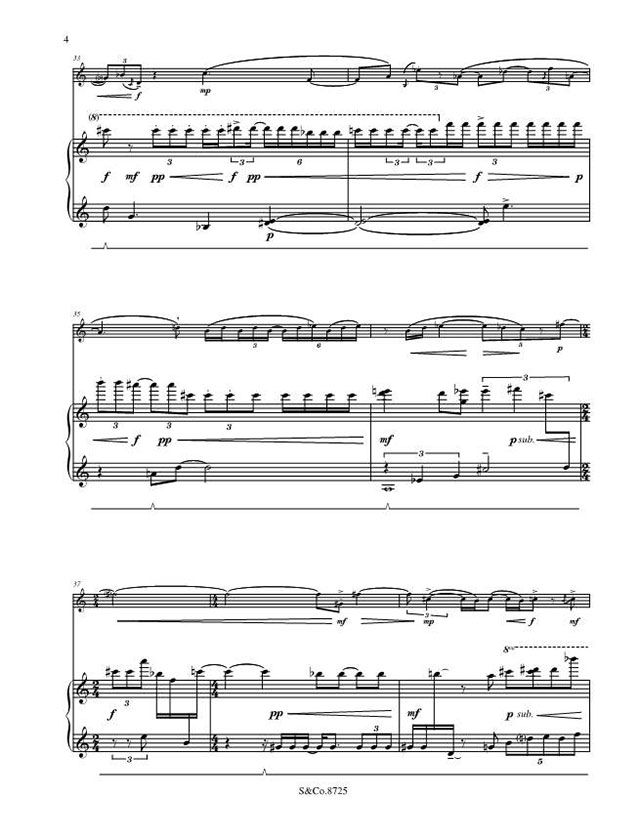
'Point forms' was suggested by a group of five diagrams found in Wassily Kandinsky's book Point and Line and Plane. Many explanations of the geometric shapes, including Kandinsky's use of the words 'stippled', 'sprayed' and 'compact' suggested musical ways to amass textures; line development and manipulation, for example by the interleaving of one idea temporarily intertwined with a previous one, allow the form to determine its own organic development. In writing for the specific quality of the basset clarinet, which extends the pitch range of the normal A clarinet, the structure of the piece allows various timbres and extended effects to come to prominence as mood and momentum change. Static or forward-moving, playful, aggressive or wailing, the musical narrative seeks through abstract paths to communicate an 'inner beauty' as well as 'inner necessity'. Processes in the work are often varied as they are repeated, in a single line or between the two performers, echoing Kandinsky's proposition that 'forces coming from without, which transform the point into a line, can be very diverse indeed. 'Point forms' was commissioned by the Rushworth Trust, and is dedicated with affection to Mark Simpson. Ken Hesketh (2010)