
Nicolas Chédeville
Il Pastor Fido - 6 Sonatas
for Flute, Oboe or Violin and Basso continuo - attributed to Antonio Vivaldi

Nicolas Chédeville
Il Pastor Fido - 6 Sonatas
for Flute, Oboe or Violin and Basso continuo - attributed to Antonio Vivaldi
- Formación Flauta travesera y bajo continuo
- Formación optativa Violín y bajo continuo
- Edición Partitura de piano y partichela(s) (Urtext)
-
Dificultad
- Compositor Nicolas Chédeville
- Editorial Bärenreiter Verlag
- Serie Bärenreiter Urtext
- Editor Federico Maria Sardelli
- Nº de pedido BA8735
IVA incluido.,
Más gastos de envío
 en stock
|
disponible en 1-3 días laborables

Descripción:
> Bärenreiter Urtext edition by Federico Maria Sardelli
> Preface (German/English) and Critical Report (English)
> Inspiring information on historical performance practice
It was in 1990 - more than 250 years after the publication of 'Il Pastor Fido' - that the masterful forgery was exposed: not Antonio Vivaldi but in fact the French composer Nicolas Chédeville (1705-1782) turned out to be the true author of this sonata collection, which was subtly foisted upon the unsuspecting Parisian public in the middle of the 18th Century, at the height of Vivaldi's popularity in France. Vivaldi himself never came to know anything of the misuse of his name and musical intellectual property.
'Il Pastor Fido' offers a 'Mélange' of very simple, movements and gallantries in the French style, as well as some throughout original movements of exceptionally fine music and powerful compositional ideas. Approximately ninety percent of 'Il Pastor Fido' is Chédeville's own work; for the remainder, he adopted and built upon themes (or those which he thought to be) by Vivaldi, all the while demonstrating a thorough understanding of the style that he was striving to imitate.
As with all of Chédeville's other works and numerous other collections from the time, the original title mentions a series of instruments, all of which are suitable for performing these sonatas: the musette, hurdy-gurdy, flute, oboe and violin. Whilst the first two, which were popular instruments at the time and corresponded to the Arcadian sensibilities of the Age of Enlightenment, have long since been out of fashion, the flute is particularly well suited today to reflect the pastoral character - noted in the title of the collection ('Il Pastor Fido': the Faithful Shepherd) - of the music.
The Bärenreiter Urtext edition was edited by the reputable Vivaldi scholar and conductor Federico Maria Sardelli. In addition to the musical text of the six sonatas, it contains a detailed preface (German / English), which not only tells the enthralling story of the forgery and reveals the 'ingredients' required for such a composition. It also contains inspiring information on performance practice, whilst presenting a critical report with references to readings and editorial decisions.
Los clientes han valorado este artículo:
Bärenreiter-Verlag Karl Vötterle GmbH & Co. KG
Heinrich-Schütz-Allee 35-37
34131
Kassel
Deutschland
Partituras desde 1969

Desde 1969, más de 500.000 clientes confían en nosotros. Con una enorme selección de más de 1.000.000 de partituras, somos uno de los mayores proveedores de Europa. Gracias a nuestro gran stock, a menudo podemos enviar partituras en 24 horas. Sea cual sea la partitura que busque: ¡está en el lugar correcto!
Atentamente, Stefanie Reichert
Responsable de atención al cliente
Artículos relacionados:


- Flauta travesera y bajo continuo
- Partitura de piano y partichela(s) para descargar (Urtext)
- Bärenreiter Verlag
-
-
En stock
|
Plazo de entrega 1-3 días laborables
- Descargar
Otros clientes también compraron:

Herbert Baumann
- Dulcimer
- Partitura general
-
disponible en 4-8 días laborables

- Flauta travesera y piano
- Partitura de piano y partichela(s)
- Jean-Pierre Rampal
-
en stock
|
disponible en 1-3 días laborables

- Flauta travesera y piano
- Partituras
-
en stock
|
disponible en 1-3 días laborables

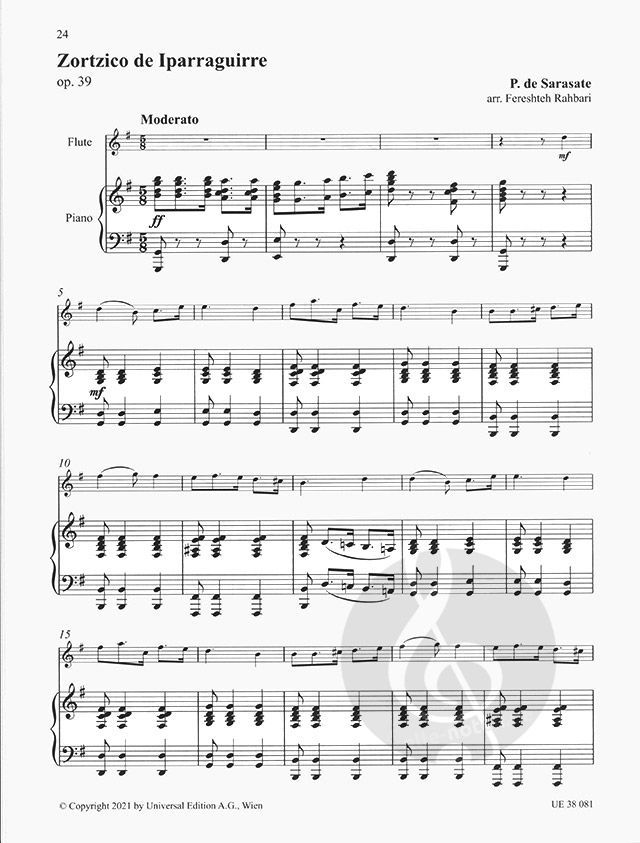
6 Stücke von Enrique Granados, Pablo de Sarasate und Isaac Albeniz
- Flauta travesera y piano
- Partitura de piano y partichela(s)
- Fereshteh Rahbari
-
en stock
|
disponible en 1-3 días laborables

- Flauta travesera y piano
- Partitura general y partichelas
-
en stock
|
disponible en 1-3 días laborables

André Ernest Modeste Grétry
- Flauta travesera y piano
- Partituras
- Jean-Pierre Rampal
-
en stock
|
disponible en 1-3 días laborables

- Flauta travesera y piano
- Partituras
-
en stock
|
disponible en 1-3 días laborables

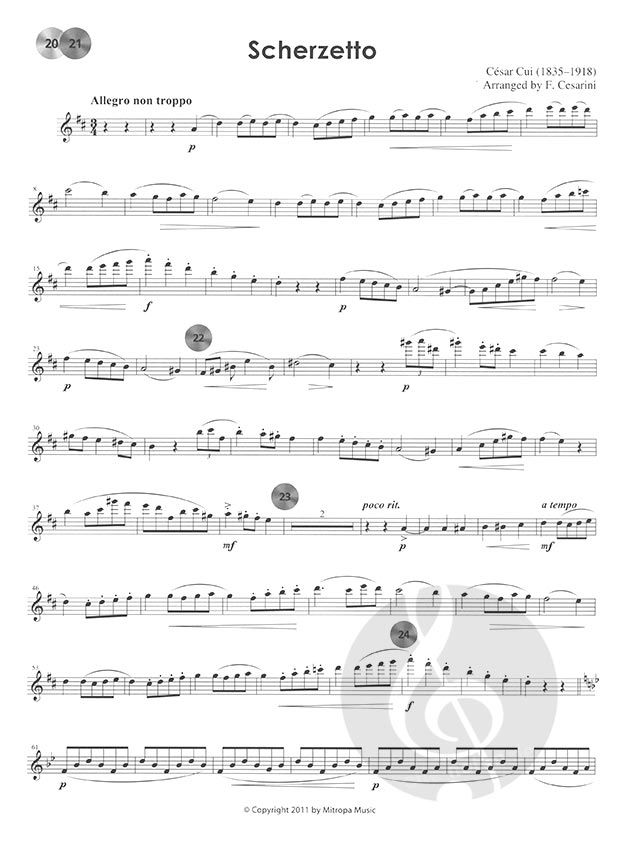
Peter Iljitsch Tschaikowsky, Sergei Rachmaninow, Modest Mussorgski, Alexander Glasunow
- Flauta travesera y piano
- Partituras y CD
- Franco Cesarini
-
en stock
|
disponible en 1-3 días laborables

- Flauta travesera
- Partituras (Urtext)
-
en stock
|
disponible en 1-3 días laborables
- También disponible para descarga.

- Flauta travesera y piano
- Reducción de piano con partichela(s)
- Rien de Reede
-
en stock
|
disponible en 1-3 días laborables

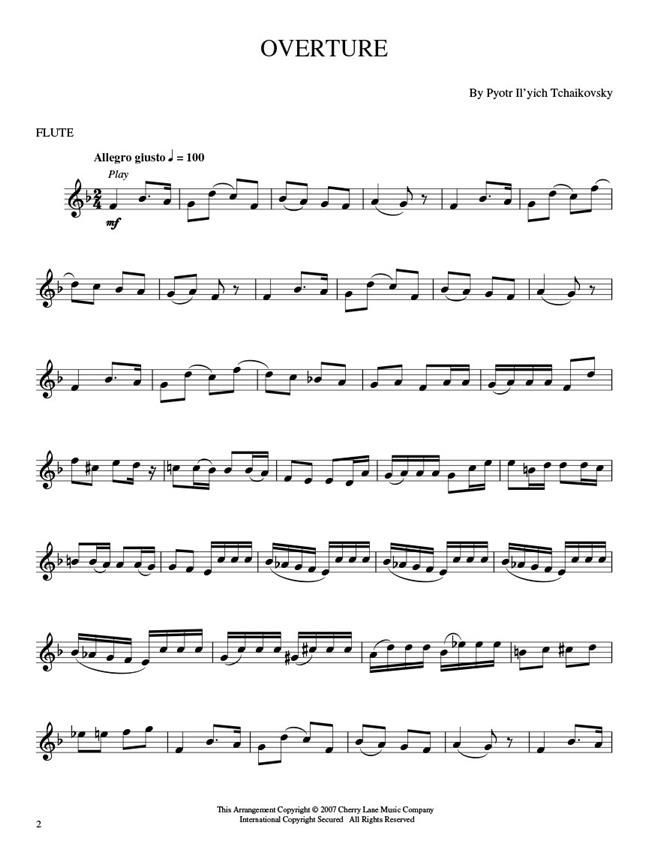
Peter Iljitsch Tschaikowsky
10 Solo Arrangements with Audio Accompaniment
- Flauta travesera
- Partituras y audio online
-
en stock
|
disponible en 1-3 días laborables



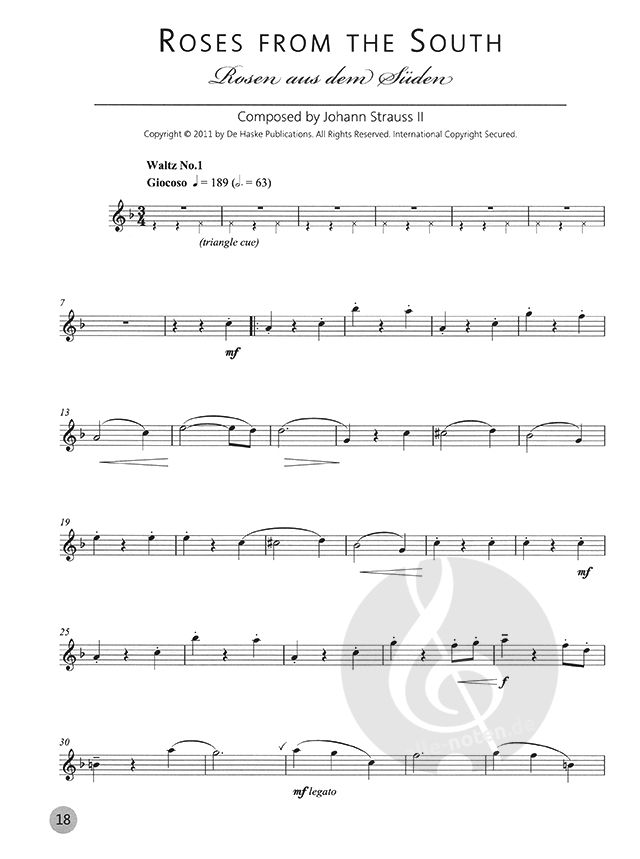
Johann Strauss (Sohn)
10 Strauss favourites arranged for solo flute with backing track CD
- Flauta travesera
- Partituras y CD
-
en stock
|
disponible en 1-3 días laborables

- Flauta travesera y bajo continuo
- Partituras
-
en stock
|
disponible en 1-3 días laborables

Ignaz Pleyel
- Flauta travesera y piano
- Partituras
- Jean-Pierre Rampal
-
en stock
|
disponible en 1-3 días laborables

Franz Anton Hoffmeister
- Flauta travesera y piano
- Partituras
- Jean-Pierre Rampal
-
en stock
|
disponible en 1-3 días laborables