
Otto M. Schwarz
Troja
Troy
Otto M. Schwarz
Troja
Troy
- Formación Orquesta de viento metal
- Compositor Otto M. Schwarz
-
Dificultad
- Edición Partitura general y partichelas
- Editorial Symphonic Dimensions Publishing
- Nº de pedido SDP130-22-202
 disponible en 1-2 semanas
IVA incluido.,
Más gastos de envío
No disponible en todos los países. Leer más

Descripción de la:
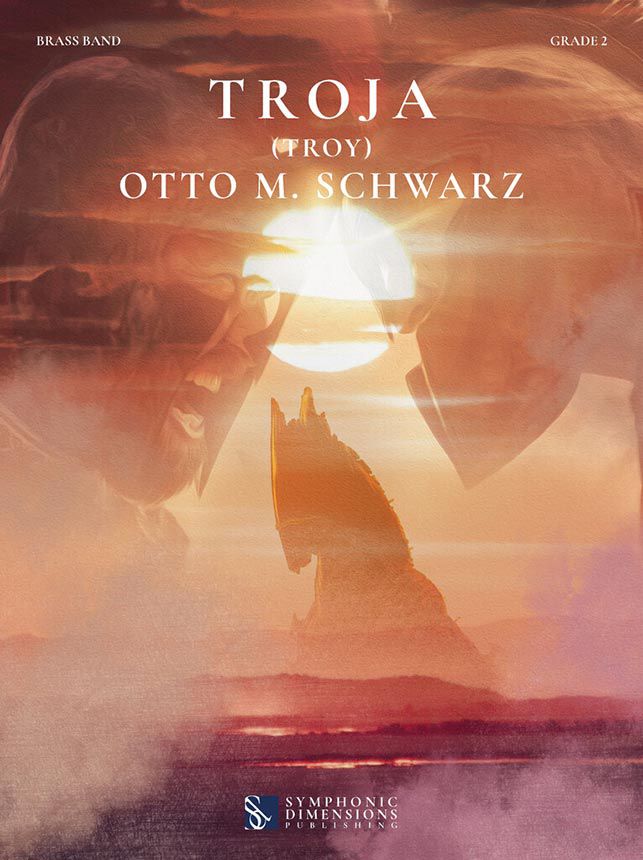
Troy and the "Trojan War", which was probably located in today's Asia Minor, were reported by the Greek poet Homer in his work "Iliad" from the 8th century BC. Today, the term "Trojan" is known in the meaning of a malicious program that is infiltrated into other people's computers. This use is derived from the legendary Trojan horse that brought about the turning point in the struggle of the Greeks against the Trojans through the cunning of Odysseus. Let's go back to the starting point of the story:
Paris, the son of the king of Troy, is asked by Zeus to judge the beauty of the three goddesses Aphrodite, Pallas Athena and Hera. Aphrodite, the goddess of love, flatters Paris by promising him the most beautiful woman in the world. Soon after, on a trip to Greece, Paris meets the beautiful Helena, who immediately falls in love with Paris. However, since she is the wife of the Spartan king Menelaus, she finally voluntarily allows herself to be kidnapped by Paris. The Greeks then join forces to form a large army and go to war against Troy to bring back Helena. There is a ten-year siege of the city. In the end, however, the city cannot be taken in battle, but only by the cunning of Ulysses. He comes up with the idea of building a large wooden horse, inside of which warriors are hiding. The horse is placed at the gates of the city. The Trojans are led to believe that they have given up the siege, whereupon they bring the horse to the city despite some warnings to consecrate it to the goddess Athena. At night, the warriors climb out of their horses and open the gate to the Greek army. The troops storm the city and burn it down.
The royal family and all the warriors of Troy are killed; only Aeneas, the son of Aphrodite, who becomes the progenitor of the Romans after years of wandering, can escape. There are several versions about the fate of the beautiful Helena. She is said to have returned to Sparta with Menelaus and ruled there until the end of her life. Or not....
Paris, the son of the king of Troy, is asked by Zeus to judge the beauty of the three goddesses Aphrodite, Pallas Athena and Hera. Aphrodite, the goddess of love, flatters Paris by promising him the most beautiful woman in the world. Soon after, on a trip to Greece, Paris meets the beautiful Helena, who immediately falls in love with Paris. However, since she is the wife of the Spartan king Menelaus, she finally voluntarily allows herself to be kidnapped by Paris. The Greeks then join forces to form a large army and go to war against Troy to bring back Helena. There is a ten-year siege of the city. In the end, however, the city cannot be taken in battle, but only by the cunning of Ulysses. He comes up with the idea of building a large wooden horse, inside of which warriors are hiding. The horse is placed at the gates of the city. The Trojans are led to believe that they have given up the siege, whereupon they bring the horse to the city despite some warnings to consecrate it to the goddess Athena. At night, the warriors climb out of their horses and open the gate to the Greek army. The troops storm the city and burn it down.
The royal family and all the warriors of Troy are killed; only Aeneas, the son of Aphrodite, who becomes the progenitor of the Romans after years of wandering, can escape. There are several versions about the fate of the beautiful Helena. She is said to have returned to Sparta with Menelaus and ruled there until the end of her life. Or not....
Los clientes han valorado este artículo:
Información del Fabricante:
Symphonic Dimensions
Postbus 119
8440 AC
Heerenveen
Deutschland
Artículos relacionados:

- Orquesta de viento metal
- Partitura general
- Symphonic Dimensions Publishing
-
-
disponible en 1-2 semanas
Otros clientes también compraron:

- 16 instrumentos de viento metal y 5 instrumentos de percusión
- Partitura general y partichelas
- Thierry Caens
-
disponible en 1-2 semanas
- También disponible para descarga.