
Robert W. Smith
Don Quixote (Symphony No. 3), Mvt. 2
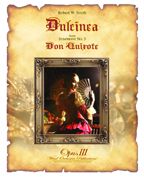
Dulcinea
Escuchar
demo
Ver
PDF
Robert W. Smith
Don Quixote (Symphony No. 3), Mvt. 2
Dulcinea
- Formación Orquesta de viento
- Compositor Robert W. Smith
-
Dificultad
- Edición Partitura general y partichelas
- Editorial C.L. Barnhouse Company
- Nº de pedido 012-3726-00
 disponible en 3-4 semanas
IVA incluido.,
Más gastos de envío
No disponible en todos los países. Leer más

Descripción de la:
Der zweite von vier Sätzen aus Robert W. Smiths epischer Komposition Dulcinea erzählt die Geschichte von Don Quijotes Verehrung der idealen Frau. In dem heissblütigen 5/4-Tango hört das Publikum die eindringliche Melodie und spürt die Leidenschaft von Cervantes' fahrendem Ritter, als er seine Liebe zu Dulcinea de Tobosa kundtut. Mit einem Englischhorn-Solo (welches durch Stichnoten von anderen Bläsern übernommen werden kann) mündet die Melodie in eine äusserst kraftvolle Passage, bevor sie in einem ruhigen, aber überraschenden Ende zum Tango zurückkehrt.
Engl.: The second of four movements in Robert W. Smith's epic work, Dulcinea tells the tale of Don Quixote's adoration of the ideal woman. Written in a sultry 5/4 tango, the audience will hear the haunting melody and feel the passion of Cervantes' knight-errant as he proclaims his love for Dulcinea de Tobosa. Featuring an English horn solo that is liberally cross-cued throughout, the initial melody gives way to the most powerful of statements before returning to the tango in a quiet, yet startling ending.
Engl.: The second of four movements in Robert W. Smith's epic work, Dulcinea tells the tale of Don Quixote's adoration of the ideal woman. Written in a sultry 5/4 tango, the audience will hear the haunting melody and feel the passion of Cervantes' knight-errant as he proclaims his love for Dulcinea de Tobosa. Featuring an English horn solo that is liberally cross-cued throughout, the initial melody gives way to the most powerful of statements before returning to the tango in a quiet, yet startling ending.