
Scott Rush, Jeff Scott
Habits of a Successful Beginner Band Musician
A Comprehensive Method Book for Year One and Beyond

Scott Rush, Jeff Scott
Habits of a Successful Beginner Band Musician
A Comprehensive Method Book for Year One and Beyond
- Formación Orquesta de viento
- Edición Partichela de oboe
- Compositor Scott Rush, Jeff Scott
- Editorial GIA Publications
- Nº de pedido GIA10162
IVA incluido.,
Más gastos de envío
 en stock
|
disponible en 1-3 días laborables

Descripción de la:
Habits of a Successful Beginner Band Musician is a field-tested, vital, and—most important—musical collection of 225 sequenced exercises for the beginning band student. The book’s cutting-edge online component, Habits Universal, features a backend gradebook that allows students to submit video recordings of their performances as a primary source of assessment. This gradebook is compatible with PowerSchool, Canvas, Google Classroom, Brightspace, Edmodo, Schoology, and many other platforms! In addition, Habits Universal features supplemental rhythm vocabulary sheets, accompaniment tracks, video start-up clinics, as well as a professional video coach for each exercise in the book.
What makes Habits of a Successful Beginner Band Musician unique? Features include:
> Teacher tips for each exercise in the book.
> Diatonic solfege that begins on the first day of instruction.
> Initial exercises on the mouthpiece, mouthpiece and barrel, reed, bocal and reed, or headjoint prior to playing the first notes in the book.
> Sequential rhythm charts embedded in the book. These same rhythms are then presented with pitches for a seamless transfer to the music students are performing.
> Technique and skill-building exercises embedded within the method, which helps to prepare students for future Habits exercises.
> The introduction of the key of Concert C, which results in students playing the pitches B, E, and A more often (as opposed to the typical emphasis on B-flat, E-flat, and A-flat).
> The introduction of five keys: Concert B-flat, E-flat, A-flat, C, and F. The Concert G scale is also provided in the back of the book.
> Left (L) and right (R) indicators for woodwinds along with appropriate chromatic alternate fingering indicators.
> Shaded boxes around first-time challenges in the student books.
> A thorough explanation of (T:1) for trombones and rules for when to use it.
> Rhythm vocabulary that progresses through quarters, eighths, dotted rhythms, sixteenths, and an eighth and two sixteenths.
> The sequential introduction of the one-handed breakdown of a percussion rudiment before introducing the rudiment itself.
> The use of the “enharmonic ladder” and the “call-and-response game” to learn enharmonic notes.
> A thorough explanation of and markings for the “F dilemma” on oboe.
> An explanation of appropriate flicking on bassoon.
> Two pages of slow “clarinets only” work that focuses on going over the break and throat tones.
Los clientes han valorado este artículo:
GIA Publications
7404 South Mason Avenue
IL 60638
Chicago
Vereinigte Staaten
alle-noten.de: Partituras desde 1969

Desde 1969, más de 500.000 clientes confían en nosotros. Con una enorme selección de más de 1.000.000 de partituras, somos uno de los mayores proveedores de Europa. Gracias a nuestro gran stock, a menudo podemos enviar partituras en 24 horas. Sea cual sea la partitura que busque: ¡está en el lugar correcto!
Atentamente, Stefanie Reichert
Responsable de atención al cliente
Otros clientes también compraron:

Scott Rush, Jeff Scott
A Comprehensive Method Book for Year One and Beyond
- Orquesta de viento
- Partichela de flauta travesera
-
en stock
|
disponible en 1-3 días laborables

Jeremy Woolstenhulme, Terry Shade
- instrumentos de cuerda
- Partichela de contrabajo y DVD
-
disponible en 3-6 días laborables

Scott Rush, Jeff Scott
A Comprehensive Method Book for Year One and Beyond
- Orquesta de viento
- Partichela de trombón
-
en stock
|
disponible en 1-3 días laborables

Scott Rush, Jeff Scott
A Comprehensive Method Book for Year One and Beyond
- Orquesta de viento
- Partichela de trompeta
-
en stock
|
disponible en 1-3 días laborables

Scott Rush, Jeff Scott
A Comprehensive Method Book for Year One and Beyond
- Orquesta de viento
- Partichela de trompa
-
en stock
|
disponible en 1-3 días laborables

Scott Rush, Jeff Scott
A Comprehensive Method Book for Year One and Beyond
- Orquesta de viento
- Partichela de clarinete
-
en stock
|
disponible en 1-3 días laborables

Kevin Boyle, Jeff Scott
A Comprehensive Method Book for Year One and Beyond
- Orquesta de viento
- Partichela de percusión
-
en stock
|
disponible en 1-3 días laborables

Jeremy Woolstenhulme, Terry Shade
- instrumentos de cuerda
- Partichela de violonchelo y DVD
-
en stock
|
disponible en 1-3 días laborables

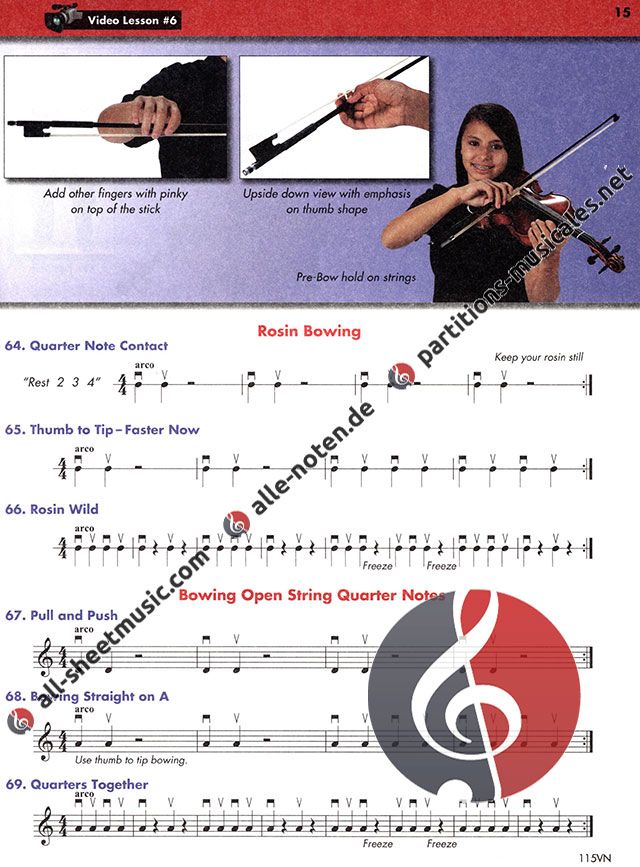
Jeremy Woolstenhulme, Terry Shade
- instrumentos de cuerda
- Partichela de violín y DVD
-
en stock
|
disponible en 1-3 días laborables

Scott Rush, Jeff Scott
A Comprehensive Method Book for Year One and Beyond
- Orquesta de viento
- Partichela de saxofón alto
-
en stock
|
disponible en 1-3 días laborables

Scott Rush, Jeff Scott
A Comprehensive Method Book for Year One and Beyond
- Orquesta de viento
- Partichela de bombardino
-
en stock
|
disponible en 1-3 días laborables

Jeremy Woolstenhulme, Terry Shade
- instrumentos de cuerda
- Partichela de viola y DVD
-
en stock
|
disponible en 1-3 días laborables