
Otto M. Schwarz
Symphony No. 1: The Borgias
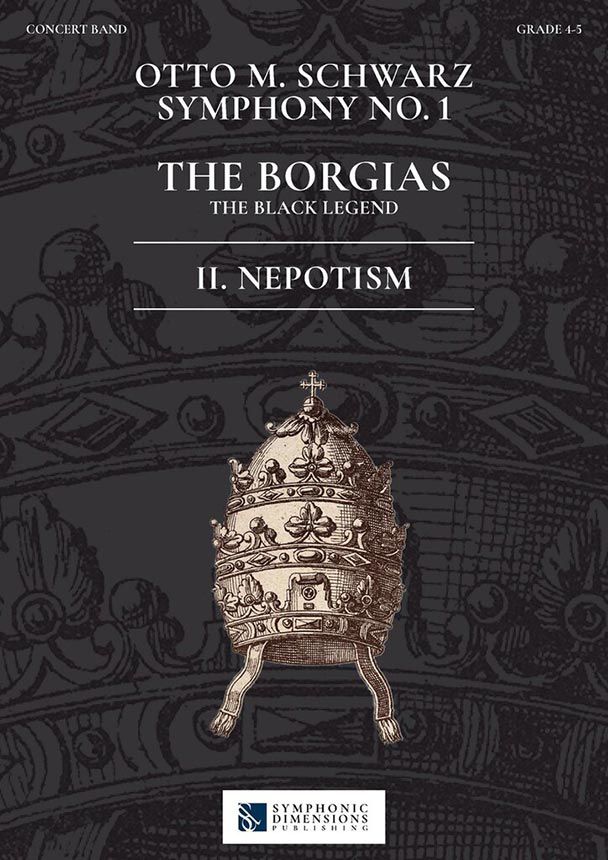
2. Nepotism
Ver
vídeo
Ver
PDF
Otto M. Schwarz
Symphony No. 1: The Borgias
2. Nepotism
- Formación Orquesta de viento
- Compositor Otto M. Schwarz
-
Dificultad
- Edición Partitura general
- Editorial Symphonic Dimensions Publishing
- Nº de pedido SDP142-22-01
 disponible en 1-2 semanas
IVA incluido.,
Más gastos de envío
No disponible en todos los países. Leer más

Descripción de la:
A black legend is circulating about the Borgia family. It is about corruption, abuse of power, orgies, sex and murder. Especially during the pontificate of Pope Alexander VI, a scion of the family, these rumors multiplied and he was sometimes even referred to as the Antichrist. When he died, contemporary witnesses reported that the devil himself was prowling around in his death chamber and that a black dog walked up and down the corridors of the Vatican as his emissary. This led to a kind of demonization of the Borgia pope, who ruled together with his family with the greatest brutality. Unscrupulousness, poisoning, incest and other wickedness highlight this pontificate to this day. 2 NEPOTISM On August 11, 1492, Rodrigo Borgia was elected pope. From the very beginning, the new pope used every means at his disposal to get rid of all opponents, either by means of the infamous "Borgia poison" or by excommunication and execution. His son Cesare, who wanted little to do with the church, was appointed cardinal against his will. Alessandro Farnese, the brother of Giulia Farnese, the Pope's mistress, also became a cardinal. Many Spaniards were brought into the country and appointed to ecclesiastical offices. This brought Alexander VI's opponents onto the scene. The Dominican Girolamo Savonarola from Florence demanded the Pope's deposition. He was tortured and burned to death. Giuliano della Rovere wanted to convene councils to depose the pope, which Alexander managed to prevent through clever politics. This pope knew how to achieve his goal of leaving his children a great inheritance with the greatest brutality, ingenious political skill and power games. Alexander VI constantly changed his allies and always acted unscrupulously in order to improve his financial situation and expand his sphere of power. At the heart of the 2nd movement of this work is the medieval hymn "Dies Irae" (Day of Wrath), which condemns the Pope's actions as a warning in the background.