
Wolfgang Amadeus Mozart
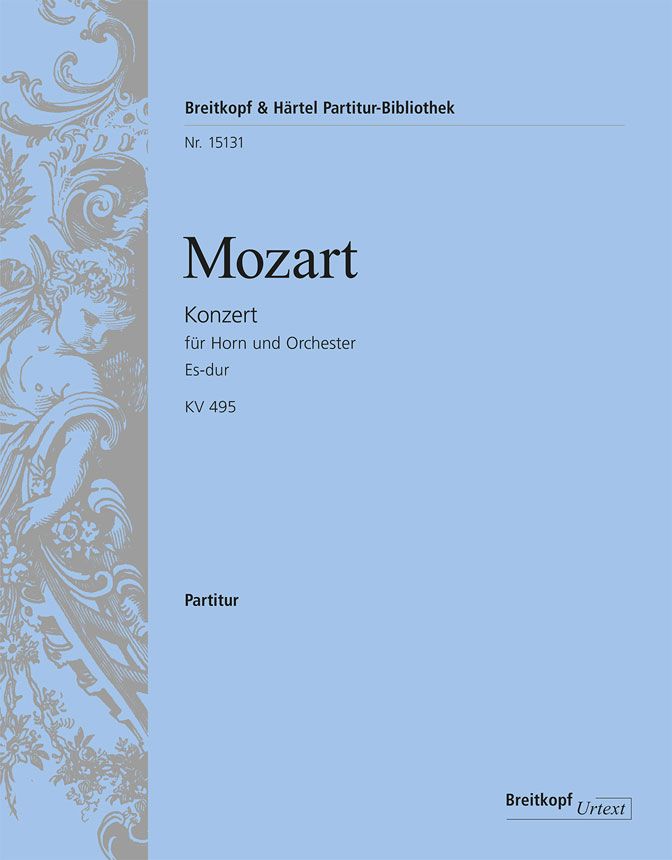
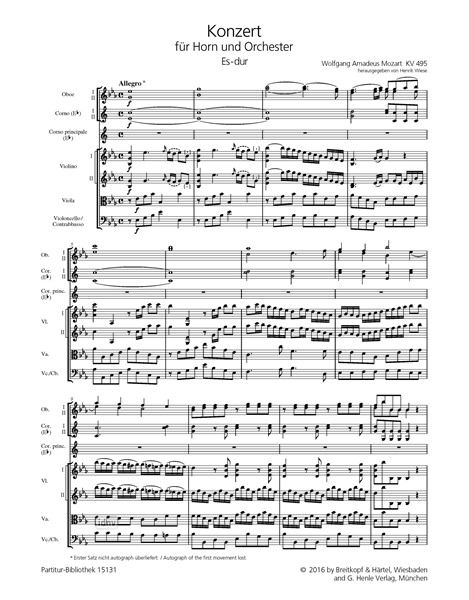
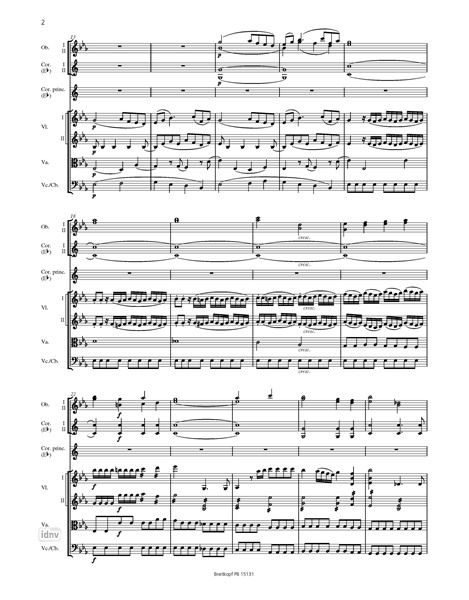
Konzert für Horn und Orchester (Nr. 4) Es-dur KV 495 (Breitkopf Urtext)
Score
Ver
PDF
Wolfgang Amadeus Mozart
Konzert für Horn und Orchester (Nr. 4) Es-dur KV 495 (Breitkopf Urtext)
Score
- Formación Trompa y orquesta
- Compositor Wolfgang Amadeus Mozart
- Editor Henrik Wiese
- Edición Partitura general
- Editorial Breitkopf & Härtel
- Nº de pedido PB15131
 disponible en 2-5 días laborables
IVA incluido.,
Más gastos de envío
No disponible en todos los países. Leer más
Descripción de la:
Joke or color code?
Mozart composed all horn concertos for Joseph Leutgeb, a longtime friend of his family. In Salzburg, Leutgeb was a horn player and violinist in the court orchestra there, then went to Vienna and performed here, among other things, as an interpreter of Mozart's horn concertos. In 1786 Mozart wrote his fourth horn concerto in E-flat major, the autograph of which has unfortunately survived only incompletely. For the present new edition in the "Breitkopf Urtext", therefore, recourse was made to a reliable early printing for the missing parts. Nevertheless, the autograph is a very valuable source, since it contains Mozart's notation of the work in colored ink! The question of whether this was a typical joke by Mozart on Leutgeb or whether he had something else in mind remains unanswered to this day. Those who are curious can form their own opinion, because Breitkopf will print the autograph parts of the score true to the original in color in its new edition.
Mozart composed all horn concertos for Joseph Leutgeb, a longtime friend of his family. In Salzburg, Leutgeb was a horn player and violinist in the court orchestra there, then went to Vienna and performed here, among other things, as an interpreter of Mozart's horn concertos. In 1786 Mozart wrote his fourth horn concerto in E-flat major, the autograph of which has unfortunately survived only incompletely. For the present new edition in the "Breitkopf Urtext", therefore, recourse was made to a reliable early printing for the missing parts. Nevertheless, the autograph is a very valuable source, since it contains Mozart's notation of the work in colored ink! The question of whether this was a typical joke by Mozart on Leutgeb or whether he had something else in mind remains unanswered to this day. Those who are curious can form their own opinion, because Breitkopf will print the autograph parts of the score true to the original in color in its new edition.
Los clientes han valorado este artículo:
Información del Fabricante:
Breitkopf & Härtel KG
Walkmühlstraße 52
65195
Wiesbaden
Deutschland
Otros clientes también compraron:
- Trompa y piano
- Partituras
-
en stock
disponible en 1-3 días laborables
- Trompa y orquesta
- Partitura general de estudio (Urtext)
-
en stock
disponible en 1-3 días laborables
- Trompa y piano
- Reducción de piano con partichela(s) (Urtext)
-
en stock
disponible en 1-3 días laborables
- Trompa y piano
- Reducción de piano con partichela(s) (Urtext)
-
en stock
disponible en 1-3 días laborables
- Trompa y piano
- Partituras
-
en stock
disponible en 1-3 días laborables
- Trompa y piano
- Partituras
-
en stock
disponible en 1-3 días laborables
- Trompa en Mib y piano
- Partituras
-
en stock
disponible en 1-3 días laborables - También disponible para descarga.
- Trompa y orquesta
- Partitura general de estudio (Urtext)
-
en stock
disponible en 1-3 días laborables
- Trompa y orquesta
- Partichela de violín 2 (Urtext)
-
disponible en 2-5 días laborables
- Trompa y orquesta
- Partichela de viola (Urtext)
-
disponible en 2-5 días laborables
Wolfgang Amadeus Mozart
Harmony voices 0/2/0/0 - 2/0/0/0
- Trompa y orquesta
- Set de partichelas - viento
-
disponible en 2-5 días laborables
- Trompa y orquesta
- Partichela de violín 1 (Urtext)
-
disponible en 2-5 días laborables
Wolfgang Amadeus Mozart
Single part basso violoncello/double bass
- Trompa y orquesta
- Partichela de violonchelo y contrabajo (Urtext)
-
disponible en 2-5 días laborables
John Rutter
- Coro mixto (SATB) y piano
- Reducción de piano
-
en stock
disponible en 1-3 días laborables




- Solistas, coro mixto (SATB), órgano y orquesta
- Partitura general (Urtext)
-
disponible en 2-5 días laborables
- También disponible para descarga.