
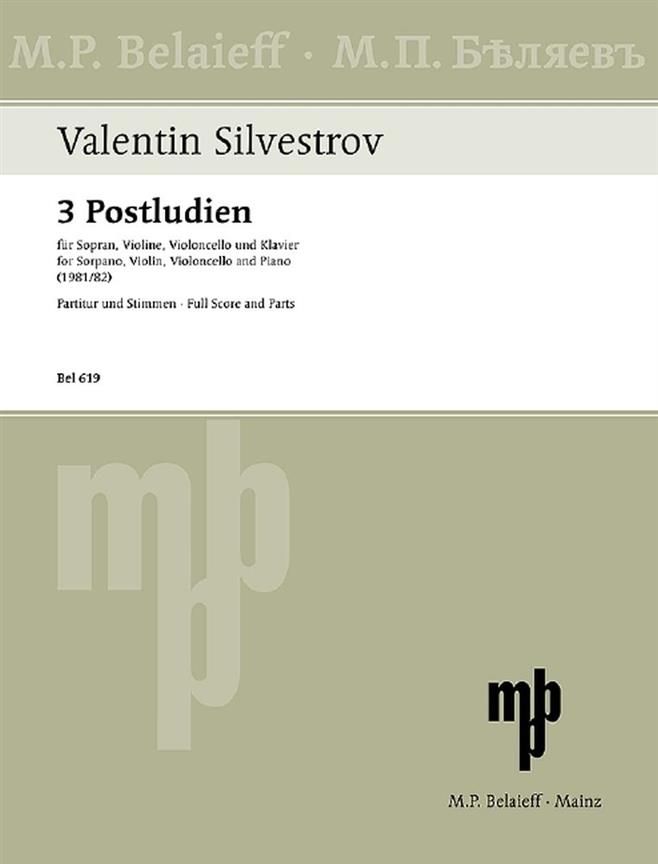
Valentin Silvestrov
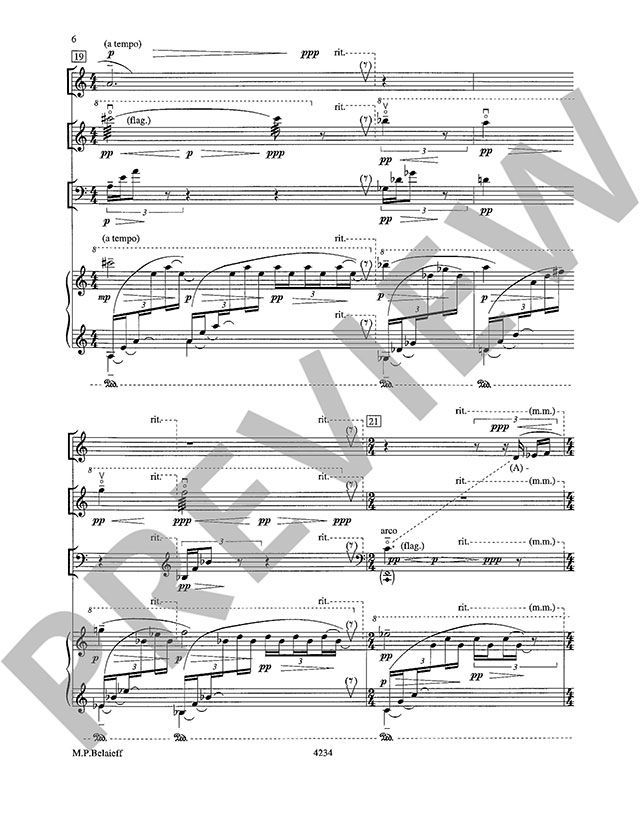
Three Postludes
for soprano, violin, cello and piano
Ver
1
PDF
Ver
2
PDF
Valentin Silvestrov
Three Postludes
for soprano, violin, cello and piano
- Formación Voz (aguda), violín, violonchelo y piano
- Compositor Valentin Silvestrov
- Edición Partitura general y partichelas
- Editorial M.P. Belaieff
- Nº de pedido BEL619
 en stock
disponible en 1-3 días laborables
IVA incluido.,
Más gastos de envío
No disponible en todos los países. Leer más

Descripción de la:
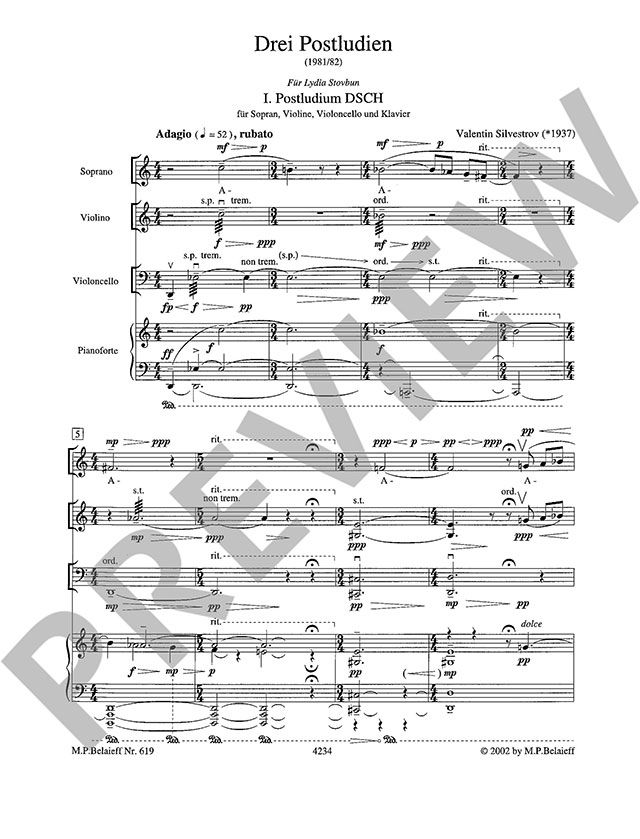
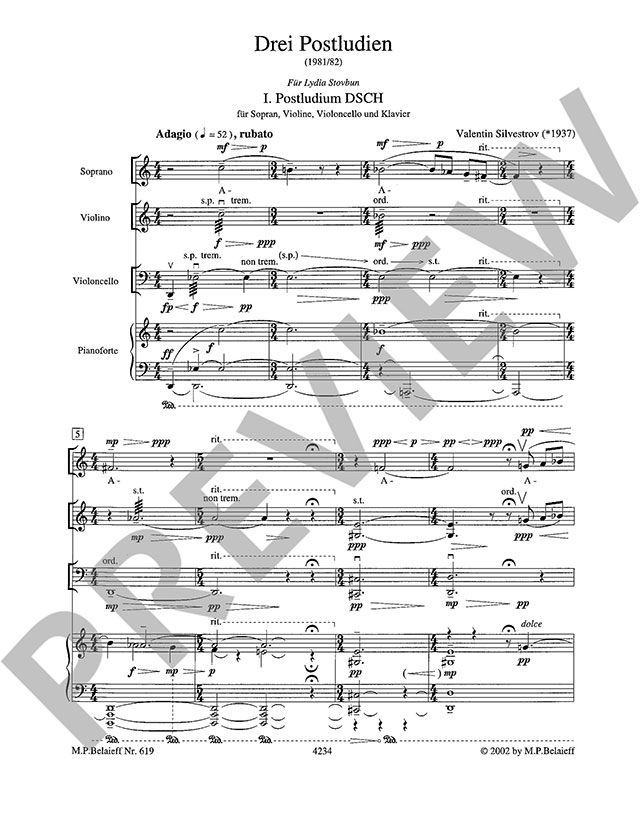
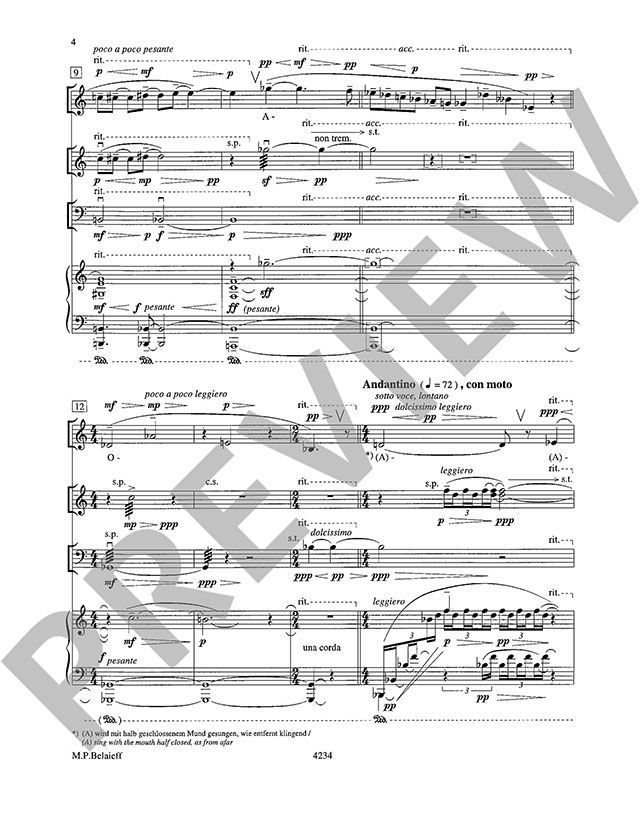
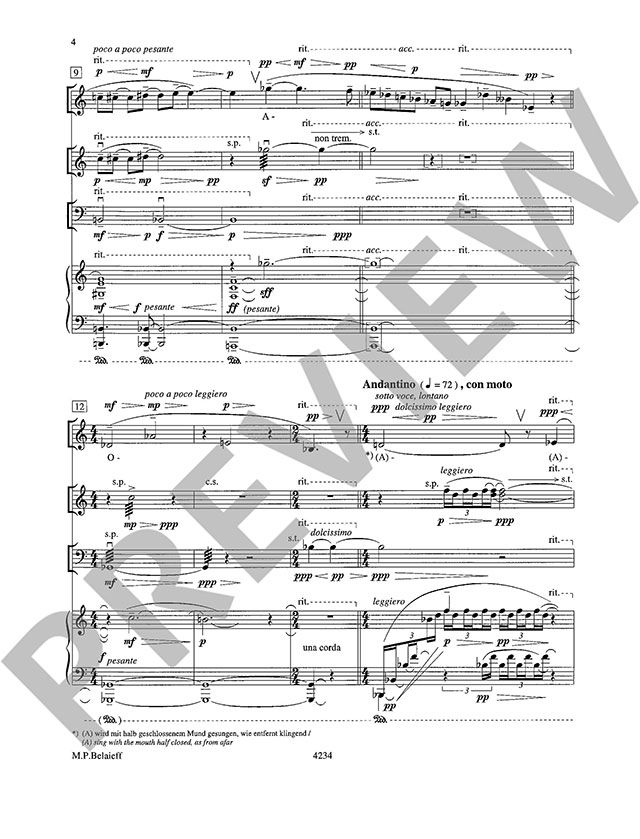
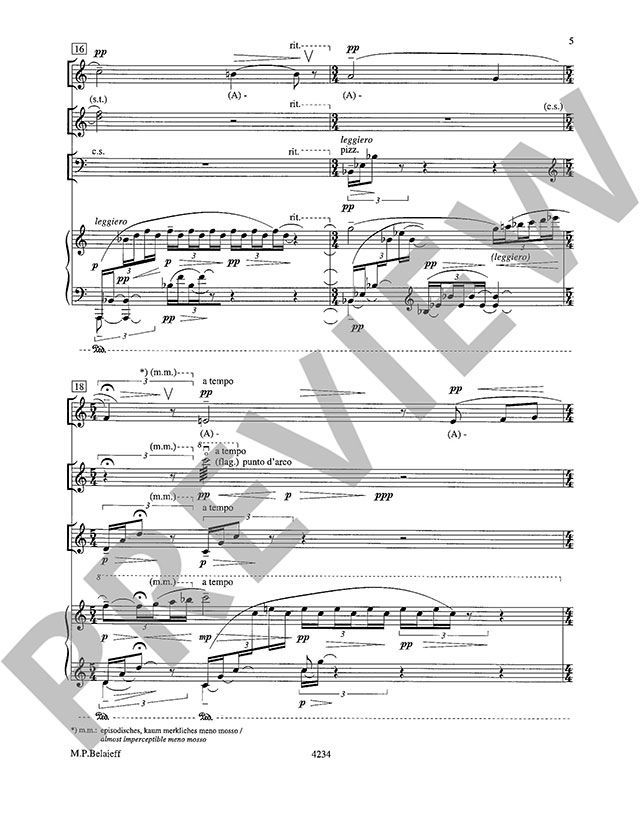
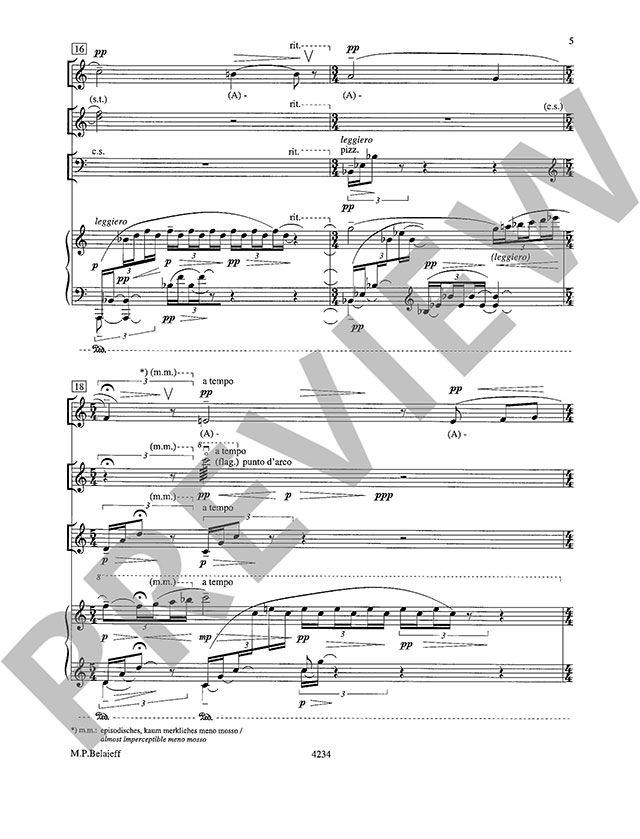
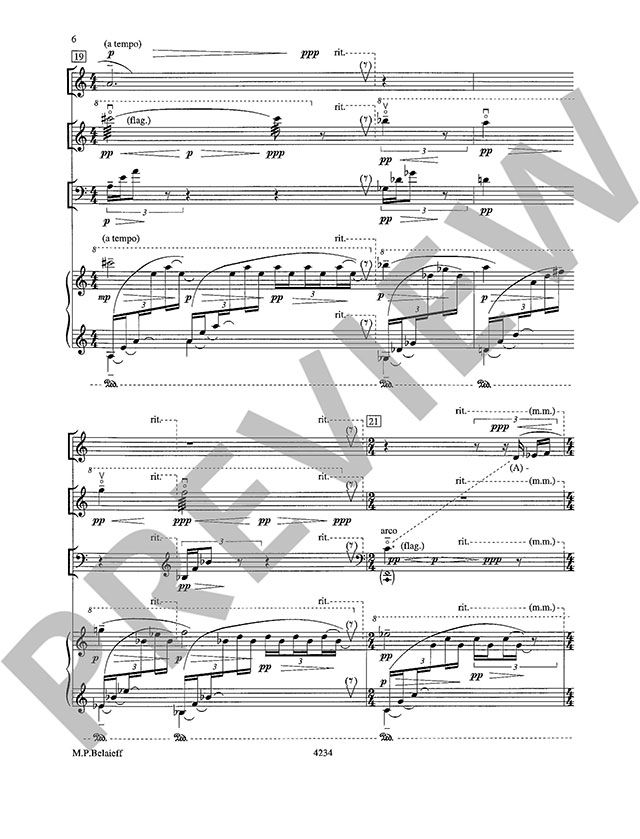
Silvestrov thinks that a coda is more than something which brings a work to an end. It is one of the most important parts of a composition, or at least just as important as the other sections. His cantatas and symphonies all have lengthy codas, and so do his songs, in which the postludes sometimes seem to take on a life of their own. These lingering 'postludes' subsequently evolved to form a new genre. The process began with the chamber triptych Three Postludes. The first Postlude DSCH for violin, violoncello, piano and voice (1981) pays homage to Shostakovich in a deliberately subdued manner (which is in stark contrast to the monumental and not infrequently unoriginal works dedicated to Shostakovich by certain Soviet composers). The second Postlude for solo violin (1981) is based on the contrast between a cantabile baroque improvisation and a virtuoso toccata. The third Postlude for violoncello and piano (1982) is an elegiac miniature, which is similar to the 'postludes' of Silvestrov's songs.' (Tatiana Frumkis)
-
I Postludium DSCH für Sopran und Klaviertrio
-
II Postludium für Violine solo
-
III Postludium für Violoncello und Klavier
Artículos relacionados:
Los clientes han valorado este artículo:
Información del Fabricante:
M.P. Belaieff
Weihergarten 5
55116
Mainz
Deutschland
Otros clientes también compraron:

Frédéric Chopin
- Piano
- Partituras
-
en stock
disponible en 1-3 días laborables

Victor Kosenko
- Violonchelo y piano
- Partituras
-
disponible en 1-2 semanas


Valentin Silvestrov
- Piano
- Partituras
-
en stock
disponible en 1-3 días laborables - También disponible para descarga.